Total Pageviews

Showing posts with label Healthcare. Show all posts

Tuesday, April 02, 2024

AI in healthcare


Integrating AI into healthcare offers profound benefits, not just in economic terms but also in enhancing the quality and efficiency of patient care. This paper articulately presents a multidimensional view of AI's impact, balancing economic savings against improvements in healthcare delivery and outcomes. As healthcare continues to evolve, embracing AI becomes essential for addressing current challenges and shaping the future of healthcare services.

Paper:  Dr. (Prof.) Narendra Nath Khanna, Mahesh Maindarkar, PhD, Vijay Viswanathan, Jose Fernandes E Fernandes, Sudip Paul, Mrinalini Bhagawati, Puneet Ahluwalia, Zoltan Ruzsa, Aditya Sharma, Raghu Kolluri, and et al. 2022. "Economics of Artificial Intelligence in Healthcare: Diagnosis vs. Treatment" Healthcare 10, no. 12: 2493. DOI: 10.3390/healthcare10122493

Saturday, April 04, 2020

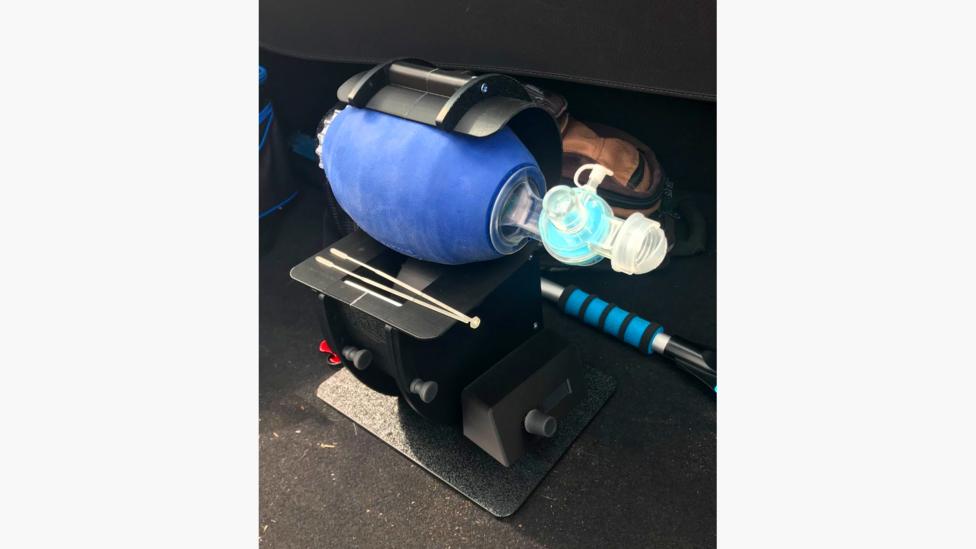
Ambu bag Ventilator gets new life with COVID 19

Many innovators in India are working on this Ambu Bag deign with improvements as an alternate to expensive ventilator. Brief history of this product.
The original bag-valve-mask concept was developed in 1953 by the German doctor Holger Hesse and his partner Danish anesthetist Henning Ruben, following their initial work on a suction pump. Their resuscitator, named “Ambu” (Artificial Manual Breathing Unit), was manufactured and marketed in 1956 by their company.

Ambu Bag
The Danish manufacturer, Testa Laboratory made the first commercially produced Ambu bags in 1957. The company later changed its name to Ambu International. Many other companies now also make self-inflating “bag and mask” resuscitators, like the one shown here. These have become standard equipment in ambulances, hospital emergency rooms, and patient rooms.
A dozen ventilator prototypes at different stages have been developed in March 2020 alone by teams in different countries – and organising on Slack channels, Facebook groups, and GitHub repositories.Some of the most basic open-source ventilator models are based on an ‘ambu-bag’.
The results of this review, however, found that the tested and peer-reviewed ventilator systems lacked complete documentation and that the current open systems that were documented were either at the very early stages of design or had undergone only early and rudimentary testing. With the considerably larger motivation of an ongoing pandemic, it is assumed these projects will garner greater attention and resources to make significant progress to reach a functional and easily replicated open source ventilator system. There is a large amount of technical future work needed to move open source ventilators up to the level considered adequate for scientific-grade equipment and further work still to reach medical-grade hardware. Future work is needed to achieve the potential of this approach not only on the technical side, but also by developing policies, updating regulations and securing funding mechanisms for the development and testing of open source ventilators for both the current COVID19 pandemic, as well as for future pandemics and for everyday use in low-resource settings.

WHO specifications-Products for Surveillance, Prevention & COVID 19

Download specifications:
WHO REFERENCE NUMBER: WHO/2019-nCoV/DCPv3/2020.4