Total Pageviews

Showing posts with label innovations. Show all posts

Saturday, March 23, 2024

Patent strategy:Global innovators of Indian origin and Resident Indian Innovators


Indian Government has taken several policy measures to boost patenting by resident Indians including faculty researchers, scientists working in public funded research institutes and independent innovators. The results are encouraging and lays the ground for next level of journey. This paper gives few examples of `Gobal Innovators of Indian Origin’ and `Resident Indian Innovators’ to explain the pathway to global excellence.

Paper:  https://papers.ssrn.com/sol3/papers.cfm?abstract_id=4754395

Thursday, October 01, 2020

Solutions Library at Engineering For Change

Engineering for Change (E4C) mission is to prepare, educate and activate the international engineering workforce to improve the quality of life of underserved communities around the world. We do this by providing resources and platforms that accelerate the development of impactful solutions and ensure public health and safety around the globe.


The E4C Solutions Library is a living database of products and services that are intended to be accessible and appropriate for those living in resource-constrained environments. The data in the Solutions Library is curated technical and market performance information that is normalized across all products, enabling side-by-side comparison and analysis of market influences.

Check the data base: https://www.engineeringforchange.org/solutions/products

Sunday, June 07, 2020

COVID 19 research at IITS

Consolidated information on all IITs available. The list includes

  • personal protection care equipment
  • testing kit
  • sanitization
  • medical equipment/ robots
  • surveillance
  • treatment
  • data analysis/AI.

Saturday, April 04, 2020

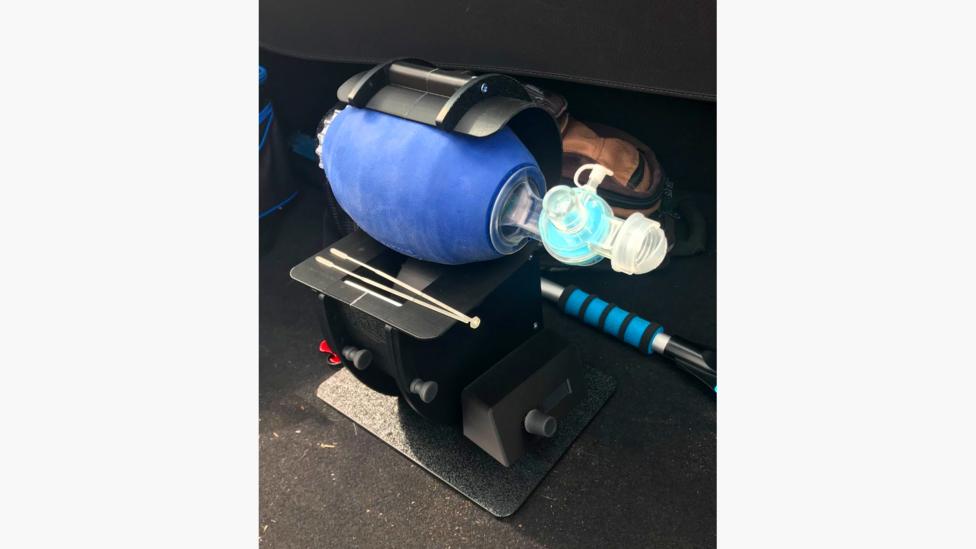
Ambu bag Ventilator gets new life with COVID 19

Many innovators in India are working on this Ambu Bag deign with improvements as an alternate to expensive ventilator. Brief history of this product.
The original bag-valve-mask concept was developed in 1953 by the German doctor Holger Hesse and his partner Danish anesthetist Henning Ruben, following their initial work on a suction pump. Their resuscitator, named “Ambu” (Artificial Manual Breathing Unit), was manufactured and marketed in 1956 by their company.

Ambu Bag
The Danish manufacturer, Testa Laboratory made the first commercially produced Ambu bags in 1957. The company later changed its name to Ambu International. Many other companies now also make self-inflating “bag and mask” resuscitators, like the one shown here. These have become standard equipment in ambulances, hospital emergency rooms, and patient rooms.
A dozen ventilator prototypes at different stages have been developed in March 2020 alone by teams in different countries – and organising on Slack channels, Facebook groups, and GitHub repositories.Some of the most basic open-source ventilator models are based on an ‘ambu-bag’.
The results of this review, however, found that the tested and peer-reviewed ventilator systems lacked complete documentation and that the current open systems that were documented were either at the very early stages of design or had undergone only early and rudimentary testing. With the considerably larger motivation of an ongoing pandemic, it is assumed these projects will garner greater attention and resources to make significant progress to reach a functional and easily replicated open source ventilator system. There is a large amount of technical future work needed to move open source ventilators up to the level considered adequate for scientific-grade equipment and further work still to reach medical-grade hardware. Future work is needed to achieve the potential of this approach not only on the technical side, but also by developing policies, updating regulations and securing funding mechanisms for the development and testing of open source ventilators for both the current COVID19 pandemic, as well as for future pandemics and for everyday use in low-resource settings.

Thursday, December 12, 2019

Innovations in mining not related to production from mining

This WIPO working paper explored the recent boom in mining innovation.
Australia, Canada, China, Europe and the United States of America concentrate the largest share of global innovation measured as mining R&D expenditures, exploration expenditures or mining technologies in patent data.
Our analysis showed how mining innovation spurs along the mining production lifecycle and value chain. In particular, recent mining innovation focused in exploration and refining technologies. However, some subsectors have contributed more to the recent mining innovation uptick more than others. In particular, there has been a decrease of the from refining technologies share in favor of those from exploration and transport technologies. We interpret these results as a direct consequence of the demand surge of mineral products in the same period. We also observe an increase of automation innovation in the mining sector. These trends are not new for the industry, which observed an increase in the 1990s and early 2000s. Nonetheless, we now observe a remarkable automation uptick.
 The distribution of economies contributing to mining technologies does not corresponds with the typical mining producing ones. Only China and the United States of America lead both in mining output and innovation. Australia, Canada and Norway also offer a relatively balanced mining output and innovation. Other typical mining economies struggle to be present in the innovation spotlight. The Russian Federation, Brazil and Chile are probably the best among these, while the other ones generate very limited innovation outcomes.
 Indeed, mining innovation is more likely to spur in functioning innovation systems not necessarily based on mining operation countries. Many developed economies not particularly relevant in mining production contribute in a great extent to the global mining innovation. Japan, the Republic of Korea and many European economies are the top ones among these.
 Traditionally mining producing and specialized economies such as Chile, South Africa and the Russian Federation have all diminished their mining innovation specialization. Conversely, Australia, Canada, the United States of America and Brazil have increased their mining relative specialization, which also means the contributed more to the global mining innovation intensity surge. Most of the increase in the exploration subsector is coming from the increase in specialization. Australia, Chile and the Republic of Korea increased their relative specialization in this subsector and are probably among the largest contributors to the exploration booming relatively to the other sectors. On mining transport, Chile and Australia were the only country improving their mining transport specialization.
The US, Canada and Australia, are more specialized in automation compared to lower-middle income and uppermiddle income nations. The selected economies are fairly weak in environment specialization. Only Chile, the Republic of Korea and the United States of America show a positive RSI for environmental technologies. 

Monday, July 22, 2019

Innovations in Public Administration in India

Conclusion in this special article by Dipti Gupta, Ashok Kumar Pandey, Amit Garg.
An analysis of the Prime Minister’s awards in the paper provides certain insight into the innovation typology in Indian public administration and its distribution. 
First, the technological and management innovations are predominant in Indian public administration. However, the citizen-centric and collaborative innovations in administration need to evolve much more in order to achieve citizen satisfaction and trust in service provision, so as to provide high quality of services consistently.
Second, the award structure change in 2016 depicts a shift towards a top-down approach promoting innovation related to central schemes rather than being oriented to local context. Priority should be to integrate people’s needs for services with various relevant policies of the government and awarded innovations, dovetailing them in that order. Feedback on service quality from the people is also to be incorporated in service assessment continuously.
Third, the public service innovation strategy should incorporate an institutional set-up for scouting and cataloguing public administration innovations with a focus on context, resources, and individual, team or organisational initiatives to create replicable templates of flexible order out of these.
Fourth, Prime Minister award process can be made more transparent by making all the competing applications visible in public domain and considering beneficiaries’ feedback while deciding the award winners, thus, validating the whole process. An online public innovation repository can help achieve this.

Thursday, January 13, 2011

Innovation activity in Asia

The 2010 State of Innovation Report is the second annual analysis of 12 key technology areas and their global innovation by the IP Solutions business of Thomson Reuters. The technology areas analyzed within this report are often those with significant volumes of patent activity, according to data in the Derwent World Patents Index® (DWPISM) database from Thomson Reuters.Patent activity is used as a barometer for innovation in this report. To measure patent activity, expert analysts studied the first instance or invention for published patent applications and granted patents in 2010, counting each invention only once, in the country where protection was first sought. Asian countries Japan, Korea and China had significant presence in Satellite Technologies, Alternative Powered vehicles, Smart media, Kitchen appliances,Fermentation , Semi conductor materials and mobile telephony.
Source:http://ip.thomsonreuters.com/InnovationReport2010/L-364963_online.pdf

Thursday, December 27, 2007

IBM predictions for 2008

New year is round the corner and for Geeks who do not believe in astrology IBM can be a better choice for what is in store for them in 2008- the predictions for 2008. The five predictions are:

1. smart energy technologies to manage personal carbon footprint
2. intelligent traffic systems
3.tracking food source from farm to market
4.compressed 3D imaging on mobile
5.super senses for diagnostics.

There are many Indian start-ups working on all these areas. One of them is Vikas sarma ready with an alpha version for capturing all information a consumer wants to know - of the farm which has grown his fruits, type of pesticides used, packaging system etc.

Saturday, December 15, 2007

100 IT Innovators 2007

NASSCOM announced list of 100 IT Innovators, a handbook giving details will be released during NaSSCOM2008 Leadership Forum meeting scheduled from 13th to 15th February at Mumbai. Registration is now open.

Saturday, December 01, 2007

E-Charka

Everyone in India is familiar with charka, the yarn spinning wheel. Innovator Rajsekhar applied for a patent for his E-Charka.The invention here is about producing electricity from the same charaka along with production of yarn. The manual motive power used for operating the charaka is connected to a desired phased electrical generator. The generated electricity is then stored in a storage battery. This stored electrical energy is used for operating Light using a LED.
contact: RAJSHEKAR SHANKARAYYA HIREMATH , NO. 1674, 27TH MAIN, SECTOR 2, HSR LAYOUT, BANGALORE -560034.

Technology Pioneers 2008

World Economic Forums's `Technology Pioneers 2008' list includes one Indian start-up; Neurosynaptic Communications Pvt Ltd in Biotechnology/health sector and another Indian promoted US venture Nanosteller In Energy/Environment sector.

Neurosynaptic Communications is a telemedicine solutions company which has developed a remote low cost diagnostic kit to measure four primary parameters, viz temperature, blood pressure, ECG and heartbeat (stethescope) for teleconsultation.The ReMeDi™ (Remote Medical
Diagnostics) range of products and comprehensive telemedicine solution developed byNeurosynaptic in collaboration with the TeNeT group of the IIT Madras, allows transmission of various vital parameters about the patient to a doctor for preliminary diagnosis, either in real-time or in a store-and-forward mode.
Pankaj Dhingra's Nanosteller
is a clean technology company. Its Rational Catalyst Design methodology unites two disciplines – computational nano-science and advanced synthetic chemistry – to speed the pace of development for nanoscaled catalytic materials for diesel emissions control.

Wednesday, October 10, 2007

Cool India-Clean India

It is the slogan of inventor JJ Singh, retired Lt.Col who developed Surya Kiran, a methodology for affordable cooling of homes, whose business plan was prepared by ISB. The methodology is based on using Nylon mesh of 80-20 black-green color mix (commonly used in greenhouses) to be installed in windows around the house and coating of lime mixed with adhesive to be applied on the roof. The mesh acts as a black body which absorbs the radiation and lime acts as a white body which reflects the radiation from the roof top. Appropriate positioning of the above materials in the house aligned with sun’s movement from East to West creates a Heat sink effect which leads to an ambient temperature of 26-28 degree Celsius inside the house with 30-40% relative humidity against the prevailing outside temperature of 38-40 degree Celsius and 10-20% humidity. This dust and temperature control system based on environment friendly material can lead to 40-50% savings in electricity consumption and bring down the dust level in the house significantly. With a initial investment of Rs.3000/- and a repeated annual cost of Rs.200/- of replacing the lime coating, this methodology is a low cost solution to create a “Cool India and Clean India”. This unique methodology has been granted a copyright and patent by the Government of India. (L – 24914 /2005, DT 8-9-2005).

The inventor is looking for partners to propagate this method. Contact JJ Singh at jj.jjsingh@gmail.com

Tuesday, July 17, 2007

Cosmos Ignite Innovations Pvt. Ltd

Cosmos Ignite Innovations Pvt. Ltd is an Indo-US Joint Venture . Building on the work of Stanford University, LUTW Foundation , Cosmos Ignite Innovations commenced as a collaboration between Cosmos Energy, India & Ignite Innovations Inc. USA. Amit Chugh, Co-Founder & CEO, is an MBA and Economics graduate with experience in Renewable Energy and Consumer Marketing. He returned to India to found and run an entrepreneurial venture in the energy space ranging from Hydro to Solar and founded Cosmos Ignite Innovations. He is based in New Delhi, India. Mighty lamp, their LED based solar operated lamp with solar panel costs about Rs 2,500/-

Wednesday, June 20, 2007

Advinus Therapeutics

Tata's wanted to reenter pharma and their first major investment was in Advinus Therapeutics Pvt. ltd, a start-up with focus on drug discovery. The brain behind the venture is Rashmi Barbhaiya. Developing novel therapies for neglected diseases such as Leshmaniasis, dengue fever, tuberculosis, leprosy and malaria is one of its priority area. As big drug companies shut down some research facilities in the U.S. and other rich countries, labs in India and China are increasingly picking up the slack. Eli Lilly & Co., Wyeth and GlaxoSmithKline PLC all have outsourced chemistry work to Indian firms.

Saturday, June 16, 2007

CSI news letter with Innovation as theme

Anuradha, working at Infosys, running innovation management program sent me link to CSI news letter with several interesting articles on Innovation. Useful insights from IT community on Innovation:
http://www.csi-pune.org/c/document_library/get_file?folderId=8&name=June-July+2007+Newsletter.pdf

CHOIS gets the first licensee

Sky n Land, the first Licensee company for CHOIS (Converged Home and Office Interactive Services) Technology, has appointed its first CHOIS Franchisee in Mangalore city. The Franchisee, Access Online, will be responsible for providing each home with a 100 Mb Ethernet fibre connection. The CHOIS Franchisee will also be providing comprehensive services for CHOISpad and CHOISpc at each home, through a CHOIS Head-end. Sky n Land is currently in process of appointing additional Franchisees in different regions in India and Abroad. This will trigger off the era for the Next Generation Video Internet and Smart Homes. CHOIS Technology is an end-to-end technology for enabling Next Generation Video Internet Services. This pioneering technology has been invented by Innomedia Technologies, Bangalore, a technology innovation company of the Reliance Communications, Mumbai. Sky n Land, Mumbai, a company promoted by pan-IITians, was appointed as the first Licensee in May 2007.
Interested -contact "Mohan Tambe"

Monday, June 11, 2007

Sewage treatment plant at Worli, Mumbai

Sewage treatment is a difficult urban problem, is expensive and often unsatisfactorily delivered especially in India. Effective but simple technology has been developed by IITB (Prof.HSShankar, ChE Dept along with his students) that uses the ‘green’ Soil Bio-Technology (SBT). The Soil bio-Technology uses a carefully prepared and maintained soil bed as a highly aerated reactor containing bio-organisms for (i) filtering the suspended matter and its bioconversion to odourless bio-fertilizer, (ii) converting dissolved organics by adsorptionand oxidation/bioconversion, and (iii) oxidizing the dissolved inorganic substances leading to precipitation and bioconversion. The basic control apparently is to manage the soil chemistry with appropriate mineral based additives to maintain a near neutral pH andto keep it highly porous for good aeration. The root systems of the plants on the bed helpin keeping the soil porous and have a biotic relationship with the organisms.