Total Pageviews

Friday, April 10, 2020

THE LONG ROAD TO TECHNOLOGY COMMERCIALIZATION- CASE OF FUEL CELLS FOR TRUCK

Geoffrey Ballard, CM, OBC (16 October 1932 – 2 August 2008) was a Canadian geophysicist and businessman. One of the studies he had been involved in at the U.S. Federal Energy Conservation Research office was on electric cars powered by conventional lead-acid batteries. Ballard had  met Ralph Schwartz in Arizona, who introduced him to the idea of using lithium batteries in place of lead-acid, as they would be much lighter. However, at the time, lithium batteries were not able to be recharged. Schwartz convinced Ballard that they should study the problem, and Ballard cashed in his pension to buy a portion of their new joint venture, American Energizer. Schwartz and Ballard were introduced to Keith Prater at the University of Texas chemistry department, and sold him on the idea of developing a new rechargeable lithium battery technology with them. Prater was able to quickly determine that no one knew what the product of the lithium-salt reactions in existing batteries were, and guessed that it was lithium dithionite, which he was able to synthesize. Working in a trailer, Ballard and Schwartz built a simple battery and Prater brought a sample of the lithium dithionite, and when they were placed together and charged, a weak current was produced. After further development the system was able to be recharged about a dozen times. Ballard had always wanted to return to Canada, so Schwartz sold his interest in the battery technology to Ballard for $1, while Ballard sold his interest in Schwartz's latest venture, a mechanical anti-lock braking system for the same $1. In 1979 Ballard moved to Vancouver and became president and CEO of Ultra Energy.
In 1983, Ballard, Prater and Paul Howard started looking for new ideas for their development side to work on as the funds for the battery project dried up. Among a variety of ideas were a number of attempts to find government funding, which eventually led them to a Department of National Defense (DND) request for proposals for bids to produce a low-cost solid polymer fuel cell. Now known as PEM's, these cells had only been used commercially in Project Gemini and a few other space probes, and General Electric gave up on the technology when NASA moved onto other fuel cell designs for Project Apollo and the Space Shuttle. Although a number of attempts had been made to lower the high cost of PEM cells since then, none had been commercially successful. They won the $500,000 contract, which called for them to provide three prototype cells that produced between 50 and 150 watts and be ready in 28 months. After meeting the requirements, they won a follow-up contract, and it was during this project, in 1986, when they reached a milestone of producing four times as much energy per unit volume as any previous fuel cell.
Feeling the technology was ready for commercial use, in 1989 Ballard raised $4 million in public money from the British Columbia government to build a fuel cell powered bus, introducing it at Science World in 1993. He took the bus to energy fairs around the world, and Daimler-Chrysler and Ford invested $750 million to buy a one-third stake in the newly public Ballard Power Systems. Ballard told Time in 1999 that the fuel-cell cars should become economical by 2010.
Dr. Sean MacKinnon was Senior Research Scientist at Ballard Power Systems , where he drafted, negotiated and managed a High Temperature PEM research project funded through Natural Resources Canada, in collaboration with NRC-IFCI. Later he worked at General Motors Fuel cell Research lab as Principle Investigator and program manager for collabative membrane development programs with strategic partners. He continued work at National Research Council of Canada and developed proton exchange membranes for automotive polymer electrolyte membrane fuel cells. Dr Deve Ghosh was Director R&D at NRC Institute for Fuel Cell Innovation in Vancouver, BC, development of Low cost durable PEMFC Pt alloy catalyst on non-carbon support ( $10M 3 year project with Ballard & AFCC) was one of major R&D project.
Mr. David Leger, has been working on the technology with inventor and engineer Mr. Greg Montie B.Eng for over a decade. Greg was a Director on the board for PowerDisc Technology, and has performed lead technical roles at Cummins Westport natural gas engines, dPoint energy recovery systems, and PowerDisc hydrogen fuel cells. During this time, he had invented and filed 10 patents resulting in a number of commercial successes. Invented and developed the patented the eFlow hydrogen fuel cell. Specifically, eFlow is an exponentially delineating hydrogen fuel cell, and is currently considered to have one of the highest specific power outputs and the only substantial fuel cell to claim uniform current density.
In 2005 Inventors Greg Montie, Rodney Bruce Redlich and David Earl Leger  filed patent for Fuel cell cathode flow field  ,Patent number: 7838169  assigned to Power Disc Development Corporation. A fuel cell cathode flow field has multiple channels each with a cross-sectional area that varies along the length of the channel such that oxygen availability at every lengthwise position along the channel is kept substantially constant for a given channel length and air stoichiometry ratio. Each channel comprises a flat floor with substantially constant depth and a pair of side walls extending upwardly from the floor; the side walls each taper inwards from channel inlet to outlet with a convex curve relative to the channel centreline. Achieving substantially uniform oxygen availability throughout the flow field results in substantially uniform current density throughout the flow field, which is desirable for efficient fuel cell operation and improved performance.
PowerDisc Development Corporation is a fuel cell company based in Vancouver BC with David Leger co- inventor of eFlow Fuel Technology was CEO and President and Dr Sean MacKinnon is Chief Scientist. PowerDisc has also been selected as a participant in the Canadian Technology Accelerator Program (CTA). Sponsored by the Canadian Department of Foreign Affairs, Trade and Development, and administered by the consular trade commissioner in Colorado, the CTA program is focused on assisting Canadian technology companies to enter the United States marketplace while providing  them with improved access to funding, customers and networks of expertise.
PowerDisc is later renamed as Loop Energy Inc in 2016  to  mark the introduction of the company's zero­emission powertrain for heavy­duty transportation. Cummins is a strategic partner and Loop will supply Cummins with its 30-kilowatt (kW) and 50-kW FC-REX range-extender systems for use in Class 6-8 demonstration trucks. Loop has several demonstration programs underway. One involves retrofitting two Class 8 Peterbilt 579 long-haul trucks with fuel-cell/battery-electric drive system integrator TransPower. Those trucks will haul up to 80,000 pounds of freight throughout the San Diego and Los Angeles regions later this year.  In 2019 company has established a joint venture and non-exclusive license agreement with IN-Power, a leading power electronics supplier to the transport sector in China. In April 2020 Loop Energy, received a purchase order from a leading bus manufacturer in China to support the Nanjing municipal government's objective of replacing its existing 7000-unit battery-electric bus fleet with an improved battery-hydrogen hybrid alternative.
During this journey the firm received several grants in Canada. It was awarded a $7.5 million grant from Sustainable Development Technology Canada (SDTC) to accelerate deployment of the company's new zero-emission powertrain for heavy-duty trucks. Funding under Western Innovation  (WINN) Initiative contributed to commercialize and scale fuel cell range extender for heavy-duty Class 8 trucks and buses beginning in 2018.

Saturday, April 04, 2020

Ambu bag Ventilator gets new life with COVID 19

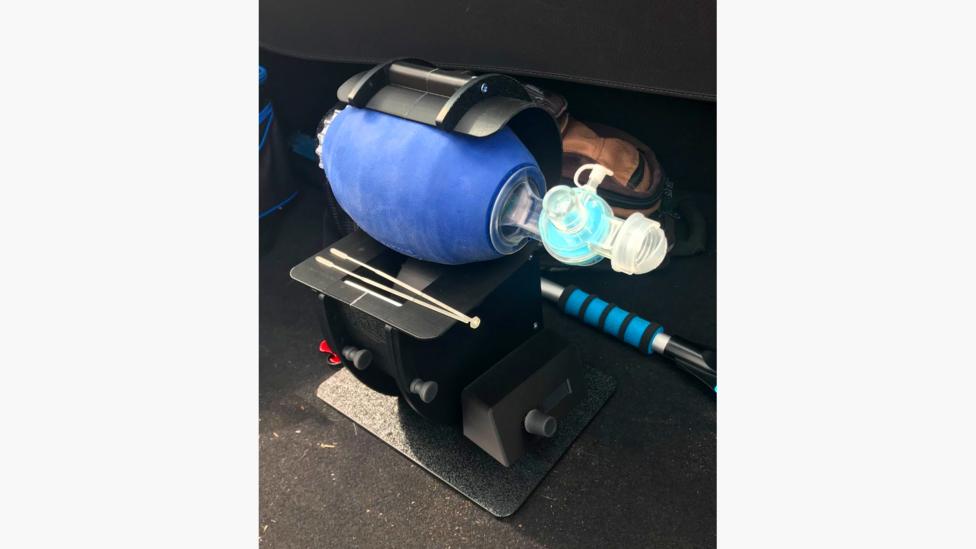
Many innovators in India are working on this Ambu Bag deign with improvements as an alternate to expensive ventilator. Brief history of this product.
The original bag-valve-mask concept was developed in 1953 by the German doctor Holger Hesse and his partner Danish anesthetist Henning Ruben, following their initial work on a suction pump. Their resuscitator, named “Ambu” (Artificial Manual Breathing Unit), was manufactured and marketed in 1956 by their company.

Ambu Bag
The Danish manufacturer, Testa Laboratory made the first commercially produced Ambu bags in 1957. The company later changed its name to Ambu International. Many other companies now also make self-inflating “bag and mask” resuscitators, like the one shown here. These have become standard equipment in ambulances, hospital emergency rooms, and patient rooms.
A dozen ventilator prototypes at different stages have been developed in March 2020 alone by teams in different countries – and organising on Slack channels, Facebook groups, and GitHub repositories.Some of the most basic open-source ventilator models are based on an ‘ambu-bag’.
The results of this review, however, found that the tested and peer-reviewed ventilator systems lacked complete documentation and that the current open systems that were documented were either at the very early stages of design or had undergone only early and rudimentary testing. With the considerably larger motivation of an ongoing pandemic, it is assumed these projects will garner greater attention and resources to make significant progress to reach a functional and easily replicated open source ventilator system. There is a large amount of technical future work needed to move open source ventilators up to the level considered adequate for scientific-grade equipment and further work still to reach medical-grade hardware. Future work is needed to achieve the potential of this approach not only on the technical side, but also by developing policies, updating regulations and securing funding mechanisms for the development and testing of open source ventilators for both the current COVID19 pandemic, as well as for future pandemics and for everyday use in low-resource settings.

WHO specifications-Products for Surveillance, Prevention & COVID 19

Download specifications:
WHO REFERENCE NUMBER: WHO/2019-nCoV/DCPv3/2020.4

Guide to local production of WHO-recommended Handrub Formulations

Part A is intended to guide a local producer in the actual preparation of the formulation.
Part B contains important safety and cost information and incorporates information from the WHO Guidelines on Hand Hygiene in Health Care (2009).

Friday, April 03, 2020

Expression of Interest (EOI) for Co Developing and manufacturing Devices for COVID-19 Pandemic

Many technologies on offer from SCTIMST: https://www.sctimst.ac.in/COVID-19/
SCTIMST invites manufacturers/start ups/social groups who are interested in working with Institute to co-develop and manufacture medical devices on a fast track mode to support the distressing situation the epidemic COVID 19 has created. Please join us for development and manufacture of devices such as :
  • Ambu bag based Ventilator
  • Ventilator Sharing Kit
  • Battery Operated Assistive Breathing Unit
  • Isolation Pods
  • Disposable Safety Face Shield
  • Deployable Field Units

For further details, please contact Technology Business Division : tbd@sctimst.ac.in
Call us : Mr S. Balram (9249402311)/ Ms Sandhya C.G (9895098086)
License to WIPRO 3D is in news.


Thursday, March 26, 2020

Working around strong patents - 3M vs Venus


In the year 2013, 3M successfully blocked Venus Safety & Helath private lts from manufacturing a product infringing its patent on  “Flat Fold Personal Respiratory Protection Device'. (ref: https://indiankanoon.org/doc/194174010/)
Venus has been in this field long enough to learn to work around the patent. Today is is one of India's largest manufacturer of masks.

Sunday, March 22, 2020

Auditing the Auditor

In today’s world where corporate scandals often make front page news, fraud prevention and detection are becoming a priority for management and decision-makers. Typically, a large majority of midsize to large organisations consider their internal and external auditors as the pivotal tool for uncovering fraud and taking preventive measures to minimise the risk of loss incurred due to a fraud. However, this doesn’t imply that independent auditors often identify fraud, in fact, the opposite is true in many cases. ACFE’s Report to the Nations points out the fact that auditors rarely find fraud – internal audit detects fraud 15% of the time, while external audit merely 4%.

A consultation paper to examine the existing provisions of law and make suitable amendments therein to enhance audit independence and accountability has been placed on the Ministry’s website at www.mca.gov.in. The paper states:
Broadly, the auditor’s financial or other interest in client’s business inappropriately influence his judgement or behaviour and a conflict of interest always exists, which may result in the auditor turning a blind eye to potential risk or at the extreme ignore an impending/occurred fraud. 2.1 There is self-interest threat due to reliance of auditor on the fee from the client. This is manifested in various ways and results in various negative consequences.
 Economic Times dealt on response of big 4 audit firms- Thermometers cannot prevent heart attacks.

Read the worst 10 accounting frauds-https://www.accounting-degree.org/scandals/


Friday, February 14, 2020

Central Electronics Ltd (CEL) on sale.


CEL is for sale.
PRELIMINARY INFORMATION MEMORANDUM (PIM) AND INVITATION OF EXPRESSION OFINTEREST (EOI) FOR  PROPOSED STRATEGIC DISINVESTMENT OF 100% SHAREHOLDING  OF  CENTRAL ELECTRONICS LIMITED (CEL) HELD BY  THE PRESIDENT OF INDIA  THROUGH  DEPARTMENT OF SCIENTIFIC AND INDUSTRIAL RESEARCH (DSIR),  MINISTRY OF SCIENCE & TECHNOLOGY (With transfer of management control) is placed on web. Last date 16-3-2020.
CEL is pioneer in the country in the field of Solar Photovoltaic (SPV) with the distinction of having developed India’s first Solar cell in 1977 and first Solar panel in 1978 as well as commissioning India’s first solar plant in 1992. More recently, it has developed and manufactured the first crystalline flexible solar panel specially for use on the passenger train roofs in 2015. Its solar products have been qualified to International Standards IEC 61215/61730. CEL developed India’s first indigenous axle-counter in 1980’s in collaboration with IIT Delhi and Railway Design and Standards Organizations (RDSO) and has subsequently developed digital axle counters. Currently the range of RDSO approved products for railway sector includes Universal Axle Counter, Single Section Digital Axle Counter – 710P, High Availability Single Section Digital Axle Counter-720P, and Multi-Section Digital Axle Counter -730. CEL is the Pioneer in manufacturing of different types of PZT elements, in India, since 1976. CEL manufactures various grade of Piezo-ceramics elements for low power as well as high power application including PZT-5A, PZT-5H, PZT-5J for low power applications and PZT-4, PZT-8 for high power applications. DEPARTMENT OF SCIENTIFIC & INDUSTRIAL RESEARCH14 PIM FORDISINVESTMENT OF 100% EQUITY SHAREHOLDING OF CELCEL is one of the very few companies, worldwide, that have pioneered the production of the ferrite phase shifters for C- and X- bands developed in collaboration with DRDO. CEL is the only manufacturer of phase shifters in the country and has developed various production facilities for meeting the bulk demand of the phase shifters.
As on 31st March 2019, CEL’s paid up capital is Rs. 69.22 crores and Net Worth is Rs. 75.99 crores. Land asset is 2,41,614 Square yards industrial   Area, Sahibabad   Ghaziabad-201010 (UP). Tangible Assets are valued at 34Crore and revenue 240 crores. CEL has a state of the art module manufacturing line having installed capacity of 38MW (10MW in manual line and 28 MW in automated line) and is known for its high quality modules. CEL is manufacturer of some of the oldest functioning modules in the country. Solar Photovoltaic Modules are manufactured using Crystalline Silicon Solar Cells.
Liabilities including commitments are around 100 crores.


Thursday, February 06, 2020

FDI in R&D in India-Reji K. Joseph, Biswajit Dhar & Akoijam Amitkumar Singh

How much foreign direct investment is taking place in R&D in India? 
MNCs using Indian talent for research but innovation comes out of development in other countries!!!
Is DSIR recognition relevant?

Interesting aspects highlighed in this paper.
1.RDFDI inflows into India during the period of analysis (2004-16)  was Rs. 54862.6 Mn. This constitutes 0.4 per cent of total FDI inflows into India.
2. RDFDI was concentrated in four sectors—ICT, natural sciences and engineering (NSE), pharmaceuticals and clinical research, which accounted for more than 80 per cent of total RDFDI.
3. Only one‐fourth of RDFDI has come to DSIR recognised firms. None of the firms in the ICT sector, which received the maximum RDFDI inflows, has DSIR recognised in‐house R&D units.
4.The share of FDI companies in corporate sector R&D is only 3 per cent.
5. Data collected from USPTO on number of patents granted in which India is an inventor country and assignee country shows that there is a growing trend of companies based in foreign countries taking patent on the outputs of R&D conducted in India. Since 2002, there has been a steady decline in the share of India based inventions receiving India as the assignee country status. Of late, only 15 per cent of the patents granted by USPTO in which India is mentioned as an inventor country, having India as the assignee country; this share was 58 per cent in 2002. 


Thursday, December 12, 2019

100 Best Innovations 2019- nominations invited


Innovations in mining not related to production from mining

This WIPO working paper explored the recent boom in mining innovation.
Australia, Canada, China, Europe and the United States of America concentrate the largest share of global innovation measured as mining R&D expenditures, exploration expenditures or mining technologies in patent data.
Our analysis showed how mining innovation spurs along the mining production lifecycle and value chain. In particular, recent mining innovation focused in exploration and refining technologies. However, some subsectors have contributed more to the recent mining innovation uptick more than others. In particular, there has been a decrease of the from refining technologies share in favor of those from exploration and transport technologies. We interpret these results as a direct consequence of the demand surge of mineral products in the same period. We also observe an increase of automation innovation in the mining sector. These trends are not new for the industry, which observed an increase in the 1990s and early 2000s. Nonetheless, we now observe a remarkable automation uptick.
 The distribution of economies contributing to mining technologies does not corresponds with the typical mining producing ones. Only China and the United States of America lead both in mining output and innovation. Australia, Canada and Norway also offer a relatively balanced mining output and innovation. Other typical mining economies struggle to be present in the innovation spotlight. The Russian Federation, Brazil and Chile are probably the best among these, while the other ones generate very limited innovation outcomes.
 Indeed, mining innovation is more likely to spur in functioning innovation systems not necessarily based on mining operation countries. Many developed economies not particularly relevant in mining production contribute in a great extent to the global mining innovation. Japan, the Republic of Korea and many European economies are the top ones among these.
 Traditionally mining producing and specialized economies such as Chile, South Africa and the Russian Federation have all diminished their mining innovation specialization. Conversely, Australia, Canada, the United States of America and Brazil have increased their mining relative specialization, which also means the contributed more to the global mining innovation intensity surge. Most of the increase in the exploration subsector is coming from the increase in specialization. Australia, Chile and the Republic of Korea increased their relative specialization in this subsector and are probably among the largest contributors to the exploration booming relatively to the other sectors. On mining transport, Chile and Australia were the only country improving their mining transport specialization.
The US, Canada and Australia, are more specialized in automation compared to lower-middle income and uppermiddle income nations. The selected economies are fairly weak in environment specialization. Only Chile, the Republic of Korea and the United States of America show a positive RSI for environmental technologies. 

SEPs in connected cars, connected homes.

SEPs (Standard Essential Patents) till now familiar in telecom like 5G now enter homes and automobiles.
 Patented essential wireless technology will transform an automobile into a connected car, a meter into a smart meter, a house into a smart home – the product of today into that of tomorrow.
Avanci a patent pool firm offering SEPs for connected cars, connected homes, connected meters. Kasim Alfalahi is the Founder and CEO of Avanci. In his previous role as Chief Intellectual Property Officer for Ericsson, Kasim led the company’s licensing and patent development worldwide – an industry-leading practice he built over 20 years. During this time, he and his team established the concept of patents as marketable business assets, transforming Ericsson from a net-payer to a net-receiver of royalty income. Under his direction, patent licensing became fundamental to Ericsson’s global success – bringing in $1.7 billion in revenue in 2015.

Monday, December 09, 2019

IIIF2019-Report


 The three day event was held in 10,000 sq.ft exhibition hall of NSIC located in Kushaiguda industrial area and attended by about 5,000 visitors who spent on the average 2hrs in the fair. Innovators from 25 countries, India, China, Macao, Philippines, Malaysia, Iran, Iraq, Syria, Lebanon, Morocco, Turkey, Zimbabwe, South Africa, Portugal, Germany, Poland, Serbia, Bosnia, Croatia, France, Romania, Moldova, Canada, USA and Brazil  displayed their innovations. NOSTC selected 35 student innovators for this international fair from out of 100 finalists at National competition. They came from different parts of the country, Gujarat, Nagaland, J&K, Bihar, Delhi, Maharashtra, Chhattisgarh, Karnataka, Andhra Pradesh and Telangana.
The fair was inaugurated on 1st December by President of Indian Innovators Association, Dr ASRao, Dr Zengpei Xuan China, Edyta WoÅ‚czyk  Poland, YS Rajan Head of International Jury and Jayesh Ranjan IAS, Principal Secretary to Government of Telangana, Industries & Commerce (I&C) Department, & Information Technology, Electronics and Communications (ITE&C) Department. After honouring jury and release of book `Creating Demand for Local Innovations’ Jayesh Ranjan talked briefly about initiatives of Telangana state in creating dynamic, vibrant environment for innovators & investors.
Simply Science organised Science Quiz, Indian innovator Mohan Sarma signed MOU with Zimbabwe/ South Africa for technology transfer and VNRVJIET signed research partnership agreement with Gram Bazaar. Several leads on business / research partnerships/ patenting support were also received. Dr Zengpei visited and addressed student of VNRVJIET on Chinese Innovation System. Mr Winfried visited and addressed youth at CCMB on science and youth. Market exploration visits arranged for visitors under Start-Up exchange program.
Mr Iftekhar Pathan, Serial investor was chief guest at the awards function on 3rd Day. Awards given by NSIC officials and IFIA members from China, Iraq, Poland and Portugal. Dr ASRao gave special awards for best exhibitor (Zen technologies), best incubator (IITK SIIC FIRST),Innovation Champion( Ms Annie Vijaya, Program Manager , TSIC ), best entrepreneur (Ram Kumar Verma, Native Araku Coffee), Rural income enhancement award (Jagarlamudi Durga Prasad) and IYIIA 2019 award to Mrs Kanak Lata, a dedicated agriculture scientist. Dr Nikhil Agarwal, Chief Executive Officer, Foundation for Innovation & Research in Science & Technology (FIRST) invited IIA to organise IIIF2010 at IIT, Kanpur, 27-28th November 2020.


Wednesday, November 20, 2019

Defense Reserach labd in India offer patents - royalty free

The Indian Defence Research Development Organization (DRDO) has formulated a new policy that allows the Organization to offer complete access to its patents filed in India without any licensing or royalty fees.  According to the notification, an application for licensing must be made through the DRDO website and a processing fee of INR 1000/- must be deposited. The Applicant is also required to disclose its financial and technical capabilities in a comprehensive manner, along with the application. All applications will undergo a screening process to determine whether the applicant has met the eligibility requirements and has provided all the required information. On completion of the same, a non-exclusive license will be granted for a period of 1 year. The Licensee is obligated to furnish details to DRDO, every year, regarding Working of Patents – Form 27. On completion of one year, the license can be renewed without incurring any additional costs. DRDO’s patent portfolio primarily consists of inventions related to missile technology, aeronautics, naval systems, life sciences, armaments, combat engineering, electronics and communication material.

Tuesday, November 12, 2019

knowledge is global but innovation is local


Knowledge creation is spreading to more and more countries. For most of the period from 1970 to 2000 only three countries – the United States (U.S.), Japan and Germany accounted for two thirds of all patenting activity worldwide. When the remaining Western European economies are included the share reached some 90 percent. But in the years since, the rest of the world has come from almost nowhere to account for almost one third of all patenting activity. Published scientific data have spread even more widely, with the rest of the world going from less than a quarter of all such publication to around half over the last 20 years.
China and the Republic of Korea are largely responsible for the rising share of new areas in knowledge production and innovation: they account for over 20 percent of patents registered in the years 2015–2017, compared to under 3 percent in 1990–1999. Other countries, notably Australia, Canada, India and Israel, have also contributed to the global spread of innovation. Many middle-income countries, however, and all lower-income countries continue to have substantially lower levels of patenting activity.
Innovation is geographically concentrated in a limited number of areas. The emerging landscape of global hotspots and niche clusters shows that inventive and scientific activity within each country is persistently concentrated in a few large, cosmopolitan and prosperous urban areas. In the U.S., hotspots around New York, San Francisco and Boston accumulated roughly a quarter of all U.S. patents filed from 2011 to 2015. In China, those around Beijing, Shanghai and Shenzhen increased their share from 36 percent to 52 percent of all Chinese patents during the same period.
Less than 19 percent of all inventive and scientific output worldwide is generated by inventors or researchers located outside hotspots and niche clusters. Despite the big change in the global innovation picture, more than 160 countries – the vast majority – still generate little innovation activity and do not host any hotspot or niche cluster.


Source: WIPO report 2019.

Sunday, November 10, 2019

International Innovation fair (IIIF 2019)

IIIF 2019 brings  largest confluence of Innovators, Entrepreneurs, Start ups from all across the globe.

Why India is reluctant to sign RCEP?

India seemed to have pulled out of RCEP. Regional comprehensive Partnership Agreement (RCEP) is a proposed free trade agreement (FTA) between 10 ASEAN countries and their six FTA partners, namely Australia, China, India, Japan, Korea and New Zealand. It accounts for 25% of global GDP, 30% of global trade, 26% of FDI flows and 45% of the total population. From India’s point of view RCEP is critical. RCEP countries account for almost 27% of India’s total trade. Exports to RCEP account for about 15% of India’s total exports and imports from RCEP comprise 35% of India’s total imports. India runs a trade deficit with ASEAN as well as the partner countries of RCEP. India’s trade deficit with the bloc has risen from $9 billion in FY05 to $83 billion in FY17, of which China alone accounts for over 60% of the deficit. The primary reason is India's limited success with FTAs.

India’s experience with FTAs
Regional trade agreements (RTAs) have become increasingly prevalent since the early 1990s. RTAs cover more than half of international trade and operate alongside global multilateral agreements under the World Trade Organization (WTO). The first eleven years (1995-2005) of the WTO were paralleled by a tripling of RTAs from 58 to 188. Currently, 455 RTAs are in force globally. India is one among top countries in Asia with the maximum number of FTAs either in operation or under negotiation or proposed. According to the Asian Development Bank Institute, as of now, India has 42 trade agreements (including preferential agreements) either in effect or signed or under negotiation or proposed. Out of this, 13 are in effect, one is signed but not yet implemented, 16 under negotiation and 12 are proposed/under consultation or study. Most of India’s existing FTAs are with Asian countries which are quite different from each other in terms of the level of their economic development. The major FTAs that India has signed and implemented so far include South Asia Free Trade Agreement (SAFTA), India-ASEAN Comprehensive Economic Cooperation Agreement (CECA), India-Korea Comprehensive Economic Partnership Agreement (CEPA) and India-Japan CEPA.
Indian exports to SAFTA countries have increased faster than its imports from them leading to a significant rise in trade surplus with these economies from about US$ 4 billion to US$ 21 billion. The maximum growth in exports to SAFTA region has been recorded with Bangladesh and Nepal. contrary to India-SAFTA trade India’s imports from ASEAN has increased at a significantly higher rate than Indian exports to ASEAN. Another important point worth to be noted is that the imports from ASEAN grew much faster than India’s imports from the world. The faster growth in imports has resulted in a significant increase in India’s trade deficit with ASEAN from less than US$ 8 billion in 2009-10 to about US$ 22 billion in 2018-19. With CEPA, India’s trade deficit with Korea from US$ 5 billion in 2009-10 to US$ 12 billion 2018-19. As in the case of ASEAN and Korea, India’s trade deficit with Japan has not only increased during2011-12 to 2018-19 but grown faster than India’s trade deficit with the world.
India seems to have underutilised its existing FTAs. The percentage of India’s international trade routed through the preferential route/FTAs is very low. According to the Asian Development Bank, the utilisation rate of India’s FTAs varies between 5% and 25%, which is one of the lowest in Asia. Moreover, exports to FTA partner countries and non-partner countries have grown at the same pace. Complex rules of origin criteria, lack of information on FTAs, higher compliance costs and administrative delays dissuade exporters from using preferential routes. The compliance cost of availing benefits under these FTAs is so high that exporters prefer using the normal route. India has actively pursued FTAs with several major trading partners in the past without benefitting much.
NITI AAYOG recommendation
Before getting into any multilateral trade deal india should
·        firstly, review and assess its existing FTAs in terms of benefits to various stakeholders like industry and consumers, trade complementarities and changing trade patterns in the past decade.
·        Second, negotiating bilateral FTAs with countries where trade complementarities and margin of prefeence is high may benefit India in the long run.
·        Third, higher compliance costs nullify the benefits of margin of preference, thus reducing compliance cost and administrative delays is extremely critical to increase utilisation rate of FTAs.
·        Fourth, proper safety and quality standards should be set to avoid dumping of lower quality hazardous goods into the Indian market.
·        Fifth, circumvention of rules of origin should be strictly dealt with by the authorities. In case of India- SriLanka FTA, Srilanka had started exporting copper to India by under invoicing of imported scrap to in order to show higher value addition for qualifying for preferential rates under the FTA. Thus, Rules of Origin (ROO) norms can easily be circumvented by simple accounting manipulation to flood Indian markets.The over-arching conclusion of this report is that FTAs have to be signed keeping two things in mind, mutually reciprocal terms and focusing on products and services with maximum export potential.

Tuesday, September 24, 2019

Patent amendment rules 2019

The Patents (Amendment) Rules, 2019 have now come into effect through a notification by the Central Government on the 18th of September 2019 in its official gazette. A major change brought about by the new rules is that now in addition to startups and applicants designating India as ISA or electing India as IPEA in their corresponding PCT applications, the option of seeking expedited examination is now available to a wide category of applicants. According to the Patents (Amendment) Rules, 2019 rule 24 C is substituted to read as follows:
…(b) that the applicant is a startup; or
(c) that the applicant is a small entity; or
(d) that if the applicant is a natural person or in the case of joint applicants, all the applicants are natural persons, then the applicant or at least one of the applicants is a female; or
(e) that the applicant is a department of the Government; or
(f) that the applicant is an institution established by a Central, Provincial or State Act, which is owned or controlled by the Government; or
(g) that the applicant is a Government company as defined in clause (45) of section 2 of the Companies Act, 2013 (18 of 2013); or
(h) that the applicant is an institution wholly or substantially financed by the Government;
Explanation:- For the purpose of this clause, the term ‘substantially financed’ shall have the same meaning as in the Explanation to sub-section (1) of section 14 of the Comptroller and Auditor General’s (Duties, Powers and Conditions of Service) Act, 1971(56 of 1971); or
(i) that the application pertains to a sector which is notified by the Central Government on the basis of a request from the head of a department of the Central Government.:
Provided that public comments are invited before any such notification; or
(j) that the applicant is eligible under an arrangement for processing a patent application pursuant to an agreement between Indian Patent Office and a foreign Patent Office.
Explanation:- The patentability of patent applications filed under clause (j) above will be in accordance with the relevant provisions of the Act.”
Source: banana IP

Friday, September 13, 2019

Demand side innovation policy

Demand side innovation policy is now considered imperative for nations economic growth. It needs to be coupled with more traditional supply side innovation policies. While , supply side is taken care in most developed nations, catching up economies still struggle for want of knowledge capabilities and funds. Demand side is more tricky and less articulated. Compatibility with WTO, multilateral, bilateral agreements is one issue. More daunting is the systems and mindset that comes in the way of picking winners. Training public procurers needs long term commitment of policy makers, bureaucrats and other stake holders of a National Innovation System.

This compendium addresses this new topic listing several best practices.
Available at:
Amazon India
Amazon USA
Amazon UK
Flip Kart
Notion Press
iBook
Kindle
Kobo
Google Play


Sunday, September 08, 2019

Indian Pharma- export thrust leads to import dependence.

In the post-2000s period, India’s policymakers went on to promote an imbalanced growth of sales revenue in the case of large domestic pharmaceutical firms in an accelerated and highly skewed way. Large firms were allowed to grow by increasing their sales revenue through the expansion of pathways of low road to industrial development.  They were were allowed to produce and sell branded generics and combination products in the domestic market. Second, large firms were allowed to outsource production to small-scale firms for sale in the domestic market. Third, domestic firms supplied contract manufacturing and research services to foreign firms. Fourth, large firms were allowed to build strategic alliances and collaborations with other large firms of domestic and foreign origin. Fifth, trade was liberalised with a view to encourage exports embedded in imported active pharmaceutical ingredients. Consequently, there has been a rise in the number of large firms who do not undertake in-house manufacture of the core ingredient of the pharmaceutical formulations, or APIs, by themselves. That has made India dependent on China for key starting materials (KSMs), intermediates and APIs . 
The “success story” of the Indian pharmaceutical industry will be over when China enters the finished products market globally, which it is starting to. 

The Drug Discovery and Development Industry in India— Two Decades of Proprietary Small-Molecule R&D

Initially, post the 2000s, drug discovery research drove innovation activity by stressing on in-house R&D capabilities for close to 30 domestic pharmaceutical firms . However, the engagement of domestic pharmaceutical firms with drug discovery for new drug development has been on the decline from 2012. The number of patents filed on new chemical entities (NCEs)  by the domestic pharmaceutical firms is small . Presently, there are only three firms pursuing some activity in drug discovery and new drug development .
Read the paper.

Monday, July 22, 2019

Innovations in Public Administration in India

Conclusion in this special article by Dipti GuptaAshok Kumar PandeyAmit Garg.
An analysis of the Prime Minister’s awards in the paper provides certain insight into the innovation typology in Indian public administration and its distribution. 
First, the technological and management innovations are predominant in Indian public administration. However, the citizen-centric and collaborative innovations in administration need to evolve much more in order to achieve citizen satisfaction and trust in service provision, so as to provide high quality of services consistently.
Second, the award structure change in 2016 depicts a shift towards a top-down approach promoting innovation related to central schemes rather than being oriented to local context. Priority should be to integrate people’s needs for services with various relevant policies of the government and awarded innovations, dovetailing them in that order. Feedback on service quality from the people is also to be incorporated in service assessment continuously.
Third, the public service innovation strategy should incorporate an institutional set-up for scouting and cataloguing public administration innovations with a focus on context, resources, and individual, team or organisational initiatives to create replicable templates of flexible order out of these.
Fourth, Prime Minister award process can be made more transparent by making all the competing applications visible in public domain and considering beneficiaries’ feedback while deciding the award winners, thus, validating the whole process. An online public innovation repository can help achieve this.

Sunday, July 21, 2019

India's S&T policy under Indira Gandhi as narrated by Ashok Parthasarathi.

Lecture by Ashok Parthasarathi, DOWN THE MEMORY LANE RECALLING INDIA’S NATION – BUILDING EXERCISE is remarkable for his insights on early years on India's S&T policy.  Glimpses on his important part of Indian history:
Space Commission: After death of Sarabhai, Satish Dhavan was identified as successor and before accepting the offer, he gave his perspective and laid down conditions , direct with Prime Minister.

When PM opened the envelope, she found a six-page handwritten letter laying out a complete space profile from the current Sounding Rockets of the Ionosphere through the Scientific Satellite Aryabhatta the Remote Sensing Satellites. Dhavan called Bhaskara, to the Application Technology Satellite -6 to the APPLE to the SLV-3 our first Satellite Launch Vehicle to the Indian National Satellite (INSAT) to the Polar Satellite Launch Vehicle for Launching Sun-Synchronous Communication Satellites in Polar Orbits to, finally launching Geostationary Satellites called the Geostationary Satellite Launch Vehicle (GSLV).
Dhavan then came up to Delhi and met Indiraji. The 20-minute meeting went very well. Dhavan laid down three conditions for his finally taking up the job. First, that the Space Commission and Department of Space should have the same kind of powers and responsibilities as did the Atomic Energy Commission (AEC)’ Secondly, like the AEC again the Head- quarters of the Commission and the Department should, not be in Delhi but in Bengaluru, what with headquarters of the mammoth Hindustan Aeronautic Ltd, the National Aerospace Laboratory (NAL) of CSIR and the Aeronautical Development Establishment (ADE) and the Gas Turbine Research Establishment (GTRE) both of the Defense R&D Organisation Bengaluru was the Aerospace Capital of the country. Dhavan’s third and last condition was that it would be difficult- indeed in correct-for him and the institution he was currently heading- the Indian Institute of Science (I. I. Sc ) also in Bengaluru to suddenly and abruptly terminate a 25-year long association by his (Dhavan’s) leaving it. So he requested PM to agree to there being a smooth and gradual transition of the following kind. Dhavan would continue as Director IISc for a three year period after he took over as Chairman Space Commission. 


Wednesday, July 17, 2019

Battle for next generation SEP- CWA 17431 or CWA 95000

SEP issues sit at the heart of future technology developments that will support internet of things (IoT) deployments across consumer and enterprise markets. Meanwhile, 5G technologies will have an increasing role to play in the future economy by enabling the rise of the IoT.Not surprisingly, there is hot debate among companies involved in forging Europe’s nascent IoT.

On one side is a small group of companies that have shifted their business models from putting products into the market, to maximising profits from SEP licensing, including Nokia, Ericsson, InterDigital, and Qualcomm. These are the companies that hold a large portion of the patents that are essential for the implementation of key interoperability standards such as 4G/LTE, wifi and Bluetooth, as well as in emerging standards that will drive future 5G networks. Their guidelines is called CWA 1 or  CWA 17431. Qualcomm, Nokia, Interdigital, Dolby, and Ericsson are important members of this group.

The App Association founded an open and inclusive effort to develop a set of industry guidelines for SEP licensing, dubbed the CEN CENELEC Workshop Agreement2, or CWA 2/ CWA 95000. Participants included SEP holders and licensees of all sizes as well as those from industries just starting to jump into IoT, such as the automotive and healthcare industries. Apple, Intel, Samsung, and Cisco are important members of this group.

Monday, July 15, 2019

Independent inventor Kris K Panchoo from Maritius allege copying of his idea by FIFA

Kris K Panchoo is an independent innovator from Mauritius. He alleges his idea of a better referee system was copied by sports organization FIFA.
ProblemThe system of refereeing was a 2-side observation of the infringement of the game - on one side is the central referee and on the other side is the lineman. From this system numerous problems were occurring because they could not detect everything as they are both far from the play action and the 22 players would often obstruct clear vision to detect infringement of the game.
Solution by Panchooa 3-side observation - on one side is the central referee, on the second side is the lineman and on the 3rd side is the Goal-lineman which is the new member I created to perform. I.e a Triangular observation. From this triangular system, refereeing errors would drastically be reduced but not to perfection because players would still obstruct clear vision. It took me like a decade to find the real solution. From writing of Indian mystics I shift the goal-lineman position from ground level to an elevated level near the goal post in order to have a Panoramic view. From this system nothing could go unseen.
Protection: He received advise  that proposed system of refereeing football relates to a scheme or method of playing a game and is consequently specifically excluded under patent law. Hence he registered it as copyright in India.
He alleges Infringement by FIFA & UEFA knowingly without acknowledging / license.
Details as given by inventor:
21.12.1986 TS – Triangular System of Refereeing Football was invented by its copyright owner – Kris K. Panchoo  but not Not disclosed 
1986 to 1996 A whole decade of research to finally transformed TS into TPS & TPS2 for a perfect and unfailing system of match control.
(TPS – Triangular and Panoramic System of Refereeing. TPS2 is another advanced version)
02.07.1996 FIFA and UEFA informed about an unfailing/perfect system of refereeing, without any disclosure of the system.
18.07.1996 informed by fifa that proposal has been submitted to Fifa’s Task Force 2000.
15.10.1996 Fifa invited Kris to have  system tested by the Mauritian International referee, Mr Kim.
21.10.1996 By telefax - I refused to discuss or prove TPS to anybody else apart from fifa’s for two reasons :
 21.10.1996 Immediate reply from fifa, rejecting my proposal of discussion and proving. 

ALLEGATION- FIFA REJECTED THE IDEA OF INVENTOR BUT STARTED USING IT UNDER A DIFFERENT NAME-additional assistant referee (AAR)
https://www.uefa.com/news/newsid=2048377.html

The inventor is looking for legal help to enforce his rights.