Total Pageviews

Wednesday, July 15, 2020

Patents and Additive Manuafcturing

AM brings together different technologies, some of which have existed since the 1950s: computer-aided design (CAD), computer-aided manufacturing (CAM), laser and electron energy beam technology, computer numerical control (CNC) machining and laser scanning. Applying these technologies to a variety of materials led to the start of a whole new industry at the end of the 1980s, generating a growing number of patent applications. The commercial use of AM emerged in 1987 with 3D Systems’ stereolithography (SLA), a process that solidifies thin layers of ultraviolet (UV) light-sensitive liquid polymer using a laser. The last 30 years have witnessed the growth of AM into a fully fledged industry.

 Initially, AM was almost exclusively used for producing prototypes, and it soon became well 
established in that field. It has since been deployed to make end-products, and this is where the sector reveals its strongest growth potential. AM can provide complex intermediate components and final products that in the past could only be made by hand or by several consecutive work steps. As almost any geometric form can be produced by AM, the technology is now used predominantly for small series of highly complex components. However, the shift from prototyping to end-product manufacturing requires further development in the sectors of hardware, e.g. printers and printing methods design and print software as well as materials used in printing.

Twenty-five companies accounted for about 30% of all AM patent applications filed with the EPO between 2000 and 2018. They include large companies from a range of sectors, including transportation, chemicals and pharmaceuticals, information technology, electronics, imaging and consumer goods, as well as pure 3D-printing specialists such as Stratasys, 3D Systems and EOS. The US and Europe dominate the ranking, with 11 US companies and eight European companies in the top 25 applicants. Of the top European applicants, five are German companies.

Download report.

Thursday, July 02, 2020

Patents and COVID innovations


COVID Crisis unleashed creativity of Indian Researchers and Innovators like never before. Is India becoming an Innovation nation?  
Here, we look at basics of IPR and some of the COVID 19 innovations.

Tuesday, June 30, 2020

India announced draft guidelines for Drones

The Draft UAS Rules goes on to categorize UAS into the following:

  1. Remotely Piloted Aircraft System (i.e. UAS piloted from a remote pilot station)
  2. Model Remotely Piloted Aircraft System (i.e. UAS operating without payload and used for educational or experimental purposes only within visual line of sight)
  3. Autonomous Unmanned Aircraft System (i.e. UAS that does not require pilot intervention in the management of the flight)
Copy of gazetted notification available.
Analysis read : http://www.nishithdesai.com/fileadmin/user_upload/Html/Hotline/200701_REGTECH_M_Future_of_drones_in_India_UAS_rules_2020.html

Tuesday, June 23, 2020

Blogging and Copyright law

Most bloggers wish to achieve great things with their blogs. However, it’s useful to know that fame (or notoriety) can leave you at the mercy of digital thieves looking to make a quick buck off of your hard work. Although you don’t need to be paranoid, it’s good to know which avenues for redress are available to you if someone does try to nab your stuff. Additionally, the golden rule applies when considering using someone else’s work on your blog; treat their work as you would have your own work treated.

Read the post from Natalie Mootz.

Sunday, June 07, 2020

COVID 19 research at IITS

Consolidated information on all IITs available. The list includes

  • personal protection care equipment
  • testing kit
  • sanitization
  • medical equipment/ robots
  • surveillance
  • treatment
  • data analysis/AI.

Thursday, May 21, 2020

CDOT GPON Technology- developed, patented globally and transferred to industry- but not a success story


C-DOT's GPON (Gigabit Passive Optical Network) technology offers an excellent mix of triple play services (voice, data & video) to end users. This is an indigenous development of C-DOT and offers advantages in terms of appropriateness for Indian environment, Innovation & local manufacturing. Current technology delivers a downstream data rate of 2.5 Gbps and an upstream data rate of 1.25 Gbps on a single fibre over a distance of up to 60 Kms. One optical fiber from OLT can be shared with up to 128 users. Signals from the OLT to the ONT are encrypted (secure) and then broadcasted to workstation devices. Signals from the workstation devices are then multiplexed back to the OLT.
In 2011, Indian Minister for Communications and IT Kapil Sibal,  transferred Gigabit Passive Optical Network (GPON) Technology to seven telecom manufacturers in public and private sectors – Indian Telephone Industries Ltd. (ITI), Bharat Electronics Ltd (BEL), VMC Systems Ltd, United Telecoms Ltd. (UTL), Sai InfoSystem (India) and S M Creative Electronics Ltd . In addition, Technology transfer agreement has also been signed with Tejas Networks Limited for customized development and Electronics Corporation of India Ltd (ECIL). US patent (Patent number: 10567075) for GIS based centralized fiber fault localization system was filed in 2016 and received in 2020.
Adoption of GPON in enterprise environment was studied by Stanislav Milanovic. Applied GPON based POLs in the enterprise environment enabled the convergence of voice, data and video onto a single strand of single mode fiber, which reduced the network infrastructure hardware to a fraction of what is required in terms of cabling and electronics in the conventional Ethernet approach. The solution not only enabled easier maintenance, but also improved efficiency with regard to end user-related, adds, moves and changes. Deployed GPON based POLs in the enterprise environment extended service to any stationary Ethernet end point. It enabled the delivery of reliable and highly secure unified network providing IP voice, data, and any type of video over a single fiber. It also increased the size of the network building block which greatly simplified enterprise network deployment, operation, and management. The solution supported energy conservation, since the optical LAN infrastructure utilized passive components like optical distribution hubs and fiber plant that required no power or cooling, resulting in significant energy savings. Implemented POLs provided immediate return on investment and a low total cost of ownership compared to copper-based LANs.
GPON Vs EPON
EPON and GPON have their own advantages and disadvantages. GPON is better than EPON from the performance index. However, EPON has the advantage of time and cost. GPON is catching up and looking forward to the future broadband access market. GPON will be more suitable for customers with high bandwidth, multi-service, QoS and security requirements and ATM technology as the backbone. For cost-sensitive, QoS, security, less demanding customer base, EPON has become dominant.
EPON began massive deployments in Japan and  South Korea. In 2005, China Telecom started EPON field trial in 4 provinces to learn how to deploy EPON. Interoperability is critical for the success and deployment of  EPON widely, so China Telecom started IOP research in 2005. In 2007 CTC achieved large scale and all‐round chip and system  EPON IOP the first time in the world (3 chip vendors, 10 system  vendors). For operators with 1G EPON-based deployments — particularly Korea Telecom, Japan‘s NTT DOCOMO access, China Telecom and China Unicom, 10G EPON is quickly becoming the next-generation technology of choice for providing both asymmetric and symmetric 10 Gbps services. 10G EPON equipment shipments and revenue continue to grow, driven currently by China Telecom, which is in the process of upgrading a portion of its first-generation 1G networks to provide more bandwidth to multi-dwelling units, or MDUs.
EPON technology matured with Chinese Telecom service providers active participation. What about Indian Scenario?


Wednesday, May 13, 2020

venture debt in India

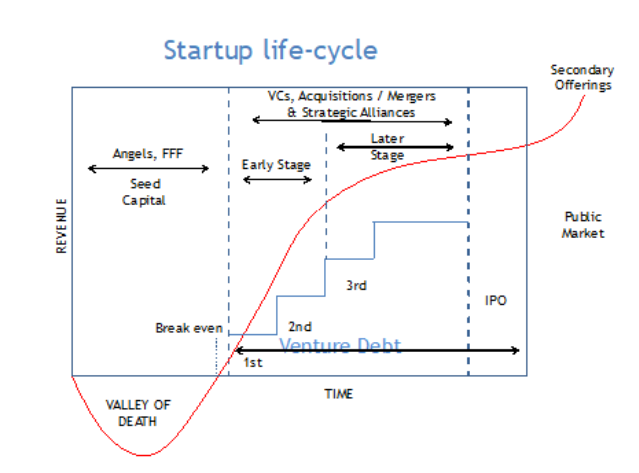
Venture debt was introduced in India 15 years ago. However, it has gained traction in the last decade. In these years, the Indian debt market for startups has been dominated by the likes of funds such as Alteria capital, Innoven capital and Trifecta capital. These firms combined have deployed approximately $300 mn (INR 2,200 crores) in startups such as Bigbasket, Curefit, Ninjacart, Dunzo and Lendingcart to name a few. In the last 6 years itself, approximately $4 bn of debt has been deployed across 150+ deals in India.  

Read article on Venture Debt in Economic Times prime (subscription required).
Also covered by Invest India. More at kauffman. And a legal perspective from Illinois.

Sunday, May 03, 2020

Will COVID change peoples behavior in India?- Nudge theory

There are comments that Indians will be better disciplined- follow Q, do not litter garbage etc after COVID19. 

Expectations are based on Nudge theory.
According to Thaler and Sunstein , a nudge is:
any aspect of the choice architecture that alters people’s behavior in a predictable way without forbidding any options or significantly changing their economic incentives. To count as a mere nudge, the intervention must be easy and cheap to avoid. Nudges are not mandates. Putting the fruit at eye level counts as a nudge. Banning junk food does not.

Richard Thaler bagging this year’s Economics Nobel for his work on behavioural economics has shone the spotlight on the ‘Nudge Theory.’ Thaler’s and Cass Sunstein’s 2008 book Nudge: Improving Decisions about Health, Wealth and Happiness has had a wide impact with some governments even setting up ‘nudge units’ in their countries.Humans, being not-so-rational, often need encouragement or intervention — a nudge — to get going and do what’s best for the country or society at large. The ‘Nudge Theory’ recognises this behavioural trait. It says that people, rather than being forced, can be encouraged and influenced to pursue or desist from certain actions through nudges. Nudges are not mandates. So, while there is encouragement, there is no compulsion to comply and people have the freedom to choose other options.

Applying nudges is that public policy makers might thus supplement – or, perhaps, even replace traditional regulation with nudges to influence people’s everyday choices and behaviors in cheaper, less invasive, and more effective ways. That is, nudging seems to offer policy makers an effective way to influence citizens’ behavior without further restricting freedom of choice, imposing mandatory obligations, or introducing new taxation, or tax reliefs.

Public policy examples of ‘Nudge’ at work include automatic enrollment of employees into pension schemes in the UK and the opt-out system for organ donation in Spain. By making the optimal choice the default option for all citizens, these nudges have helped improve public participation in these programes.

Friday, May 01, 2020

Government of India’s Measures to Boost Business, Improve EoDB & Welcome FDI During COVID-19

The spread of Covid-19 in India and its mitigation plan of 40 day nationwide lockdown from 25 March 2020 to 3 May 2020 and a possibility of further extension of lockdown by several State Governments, there is likely to be a significant impact across various sectors of the economy. To address these adverse times, the Government of India has been preparing strategies and action plans not only for business continuity and sectoral revival but also re-rolling the red carpet for global investors to continue to choose India as their preferred destination for investments. The Government of India continues to enhance international co-operation for promoting FDI and improve Ease of Doing Business in the country by releasing notifications / amendments / circulars highlighting measures to improve business environment in India. Below are some of the special measures by Central government, State governments and the sectoral ministries to welcome and boost businesses in India. 
Download report here.

Thursday, April 30, 2020

Hand washing Compendium for Low Resource Settings: A Living Document

Frequent and proper handwashing with soap is one of the most important measures that can be used to prevent the spread of the COVID-19 virus, along with physical distancing, avoiding touching one’s face (eyes, nose and mouth) and practicing good respiratory hygiene. Yet 40 per cent of households lack access to a facility with soap and water, of which 18 per cent have no facility whatsoever (WHO and UNICEF, 2020). 
 In response to the global COVID-19 pandemic, the Sanitation Learning Hub at the Institute of Development Studies has rapidly developed the Handwashing Compendium for Low Resource Settings that can be used to support increased access to facilities and promote positive handwashing behaviours. 
 The compendium provides guidance on low-cost handwashing facilities that can be widely used in low and middle-income countries. We hope that this can be shared extensively as governments and agencies tackle the crisis in low and middle-income countries where handwashing facilities are urgently needed in households, communities, schools and healthcare facilities. 
 The compendium includes information and further reading on: • Handwashing facilities – including facilities that are accessible for all. • Environmental cues to reinforce handwashing behaviours. • Physical distancing hygiene promotion. 
 Download report.

Wednesday, April 29, 2020

Natures UV light to UV-C LED for COVID 19


Like electricity, ultraviolet light is as old as the universe. It just took someone to notice. In 1877, British Physiologist Arthur Downes and scientist Thomas P. Blunt noticed. They put solution-filled test tubes outside and discovered that sunlight could kill and inhibit the development of pathogenic bacteria.
Some 25 years later, the German Ophthalmologist Ernst Hertel built on this knowledge, determining that light in the UV-C wavelength, rather than UV-A or UV-B, is the most effective for killing microorganisms. Around the same time, the Danish Professor Niels Finsen won the Nobel Prize for Physiology in recognition of his work in treating lupus vulgaris bacteria on human skin with concentrated light (See image). In the 1930s and 1940s, William F. Wells, a Harvard University sanitary engineer, made a significant stride in the knowledge and application of UV-C light for disinfection by proving its effectiveness in killing airborne microorganisms. It was Wells who discovered that bacteria and viruses can be transmitted to people through the air they breathe.
UV has been proven effective against a broad spectrum of microorganisms. Viruses contain RNA or DNA and are thus susceptible to irradiation. Bacteria and fungi both contain DNA and are similarly vulnerable to UV light. Spores are also susceptible to UV. With the longstanding use of UV for disinfection, there is a plethora of information regarding dosages necessary to inactivate different microorganisms. Bacteria are generally easier to inactivate than viruses, with fungi and spores being even harder to inactivate with UV.  (Read the paper)


Monday, April 20, 2020

ARI researchers develop `Bug Sniffer'


Researchers at the Agharkar Research Institute (ARI), Pune, an autonomous institute under the Department of Science &Technology, Govt. of India, have developed a sensitive and low-cost sensor to rapidly detect bacteria.  The portable device can detect as low as ten bacterial cells from a sample size of one milliliter in just 30 minutes. At present, they are working on a method for simultaneous separation and detection of Escherichia coli and Salmonella typhimurium.  Lead researcher Dr Dhananjay Bodas and his team from ARI call it the ‘bug sniffer,’ which is a biosensor that uses synthetic peptides, magnetic nanoparticles, and quantum dots to detect the presence of bacteria, providing a cost- and time-effective way of screening water and foodborne pathogens. The researchers also developed a chip comprising of microchannels made from copper wires and poly (dimethylsiloxane) The conventional techniques available for pathogen detection are less sensitive and cannot detect low cell numbers, besides being time-consuming and laborious whereas the ARI device, can detect pathogens with a limit of detection of 10 cells per 1 mL within 30 minutes.


Hot air sealing machine for PPE

There are reports that India's efforts to make PPEs in large quantity are hampered by absence of locally produced Hot Air Sealing machines. In this articlePrabir Jana, Professor, NIFT Delhi (India) with inputs from UNIK Technologyz (India) and Tukatech, Inc. (USA) demystify the making of body coverall on an industrial scale.

Saturday, April 18, 2020

Hydrogen on Demand -long road to technology commercialisation.

In 1967, while working as a researcher at IBM, Woodall discovered that liquid alloys of aluminum and gallium spontaneously produce hydrogen if mixed with water. The research, which focused on developing new semiconductors for computers and electronics, led to advances in optical-fiber communications and light-emitting diodes, making them practical for everything from DVD players to television remote controls and new types of lighting displays. That work also led to development of advanced transistors for cell phones and components in solar cells powering space modules like those used on the Mars rover, earning Woodall the 2001 National Medal of Technology from President George W. Bush. Also while at IBM, Woodall and research engineer Jerome Cuomo were issued a U.S. patent in 1982 for a "solid state, renewable energy supply." The patent described their discovery that when aluminum is dissolved in liquid gallium just above room temperature, the liquid alloy readily reacts with water to form hydrogen, alumina and heat.
Woodall moved to Purdue university and continued to work on the aluminium alloy. His team succeeded in developing technology that produces hydrogen by adding water to an alloy of aluminum and gallium. When water is added to the alloy, the aluminum splits water by attracting oxygen, liberating hydrogen in the process. The Purdue researchers are developing a method to create particles of the alloy that could be placed in a tank to react with water and produce hydrogen on demand. The Purdue Research Foundation holds title to the primary patent, which has been filed with the U.S. Patent and Trademark Office and is pending. An Indiana startup company, AlGalCo LLC., has received a license in 2007 for the exclusive right to commercialize the process.
AlGalCo founder and president  Kurt Koehler is a businessman, not a chemist. He graduated with a degree in marketing and management from IU and went on to earn a Master's in European History. As luck would have it, an encounter with Purdue representatives at the Indiana State Fair piqued his interest and ultimately led him to Purdue professor Jerry Woodall, who had developed the aluminum alloy technology. After 14 years of beta testing product is rolled out for Carmel's city fleet

Friday, April 10, 2020

THE LONG ROAD TO TECHNOLOGY COMMERCIALIZATION- CASE OF FUEL CELLS FOR TRUCK

Geoffrey Ballard, CM, OBC (16 October 1932 – 2 August 2008) was a Canadian geophysicist and businessman. One of the studies he had been involved in at the U.S. Federal Energy Conservation Research office was on electric cars powered by conventional lead-acid batteries. Ballard had  met Ralph Schwartz in Arizona, who introduced him to the idea of using lithium batteries in place of lead-acid, as they would be much lighter. However, at the time, lithium batteries were not able to be recharged. Schwartz convinced Ballard that they should study the problem, and Ballard cashed in his pension to buy a portion of their new joint venture, American Energizer. Schwartz and Ballard were introduced to Keith Prater at the University of Texas chemistry department, and sold him on the idea of developing a new rechargeable lithium battery technology with them. Prater was able to quickly determine that no one knew what the product of the lithium-salt reactions in existing batteries were, and guessed that it was lithium dithionite, which he was able to synthesize. Working in a trailer, Ballard and Schwartz built a simple battery and Prater brought a sample of the lithium dithionite, and when they were placed together and charged, a weak current was produced. After further development the system was able to be recharged about a dozen times. Ballard had always wanted to return to Canada, so Schwartz sold his interest in the battery technology to Ballard for $1, while Ballard sold his interest in Schwartz's latest venture, a mechanical anti-lock braking system for the same $1. In 1979 Ballard moved to Vancouver and became president and CEO of Ultra Energy.
In 1983, Ballard, Prater and Paul Howard started looking for new ideas for their development side to work on as the funds for the battery project dried up. Among a variety of ideas were a number of attempts to find government funding, which eventually led them to a Department of National Defense (DND) request for proposals for bids to produce a low-cost solid polymer fuel cell. Now known as PEM's, these cells had only been used commercially in Project Gemini and a few other space probes, and General Electric gave up on the technology when NASA moved onto other fuel cell designs for Project Apollo and the Space Shuttle. Although a number of attempts had been made to lower the high cost of PEM cells since then, none had been commercially successful. They won the $500,000 contract, which called for them to provide three prototype cells that produced between 50 and 150 watts and be ready in 28 months. After meeting the requirements, they won a follow-up contract, and it was during this project, in 1986, when they reached a milestone of producing four times as much energy per unit volume as any previous fuel cell.
Feeling the technology was ready for commercial use, in 1989 Ballard raised $4 million in public money from the British Columbia government to build a fuel cell powered bus, introducing it at Science World in 1993. He took the bus to energy fairs around the world, and Daimler-Chrysler and Ford invested $750 million to buy a one-third stake in the newly public Ballard Power Systems. Ballard told Time in 1999 that the fuel-cell cars should become economical by 2010.
Dr. Sean MacKinnon was Senior Research Scientist at Ballard Power Systems , where he drafted, negotiated and managed a High Temperature PEM research project funded through Natural Resources Canada, in collaboration with NRC-IFCI. Later he worked at General Motors Fuel cell Research lab as Principle Investigator and program manager for collabative membrane development programs with strategic partners. He continued work at National Research Council of Canada and developed proton exchange membranes for automotive polymer electrolyte membrane fuel cells. Dr Deve Ghosh was Director R&D at NRC Institute for Fuel Cell Innovation in Vancouver, BC, development of Low cost durable PEMFC Pt alloy catalyst on non-carbon support ( $10M 3 year project with Ballard & AFCC) was one of major R&D project.
Mr. David Leger, has been working on the technology with inventor and engineer Mr. Greg Montie B.Eng for over a decade. Greg was a Director on the board for PowerDisc Technology, and has performed lead technical roles at Cummins Westport natural gas engines, dPoint energy recovery systems, and PowerDisc hydrogen fuel cells. During this time, he had invented and filed 10 patents resulting in a number of commercial successes. Invented and developed the patented the eFlow hydrogen fuel cell. Specifically, eFlow is an exponentially delineating hydrogen fuel cell, and is currently considered to have one of the highest specific power outputs and the only substantial fuel cell to claim uniform current density.
In 2005 Inventors Greg Montie, Rodney Bruce Redlich and David Earl Leger  filed patent for Fuel cell cathode flow field  ,Patent number: 7838169  assigned to Power Disc Development Corporation. A fuel cell cathode flow field has multiple channels each with a cross-sectional area that varies along the length of the channel such that oxygen availability at every lengthwise position along the channel is kept substantially constant for a given channel length and air stoichiometry ratio. Each channel comprises a flat floor with substantially constant depth and a pair of side walls extending upwardly from the floor; the side walls each taper inwards from channel inlet to outlet with a convex curve relative to the channel centreline. Achieving substantially uniform oxygen availability throughout the flow field results in substantially uniform current density throughout the flow field, which is desirable for efficient fuel cell operation and improved performance.
PowerDisc Development Corporation is a fuel cell company based in Vancouver BC with David Leger co- inventor of eFlow Fuel Technology was CEO and President and Dr Sean MacKinnon is Chief Scientist. PowerDisc has also been selected as a participant in the Canadian Technology Accelerator Program (CTA). Sponsored by the Canadian Department of Foreign Affairs, Trade and Development, and administered by the consular trade commissioner in Colorado, the CTA program is focused on assisting Canadian technology companies to enter the United States marketplace while providing  them with improved access to funding, customers and networks of expertise.
PowerDisc is later renamed as Loop Energy Inc in 2016  to  mark the introduction of the company's zero­emission powertrain for heavy­duty transportation. Cummins is a strategic partner and Loop will supply Cummins with its 30-kilowatt (kW) and 50-kW FC-REX range-extender systems for use in Class 6-8 demonstration trucks. Loop has several demonstration programs underway. One involves retrofitting two Class 8 Peterbilt 579 long-haul trucks with fuel-cell/battery-electric drive system integrator TransPower. Those trucks will haul up to 80,000 pounds of freight throughout the San Diego and Los Angeles regions later this year.  In 2019 company has established a joint venture and non-exclusive license agreement with IN-Power, a leading power electronics supplier to the transport sector in China. In April 2020 Loop Energy, received a purchase order from a leading bus manufacturer in China to support the Nanjing municipal government's objective of replacing its existing 7000-unit battery-electric bus fleet with an improved battery-hydrogen hybrid alternative.
During this journey the firm received several grants in Canada. It was awarded a $7.5 million grant from Sustainable Development Technology Canada (SDTC) to accelerate deployment of the company's new zero-emission powertrain for heavy-duty trucks. Funding under Western Innovation  (WINN) Initiative contributed to commercialize and scale fuel cell range extender for heavy-duty Class 8 trucks and buses beginning in 2018.

Saturday, April 04, 2020

Ambu bag Ventilator gets new life with COVID 19

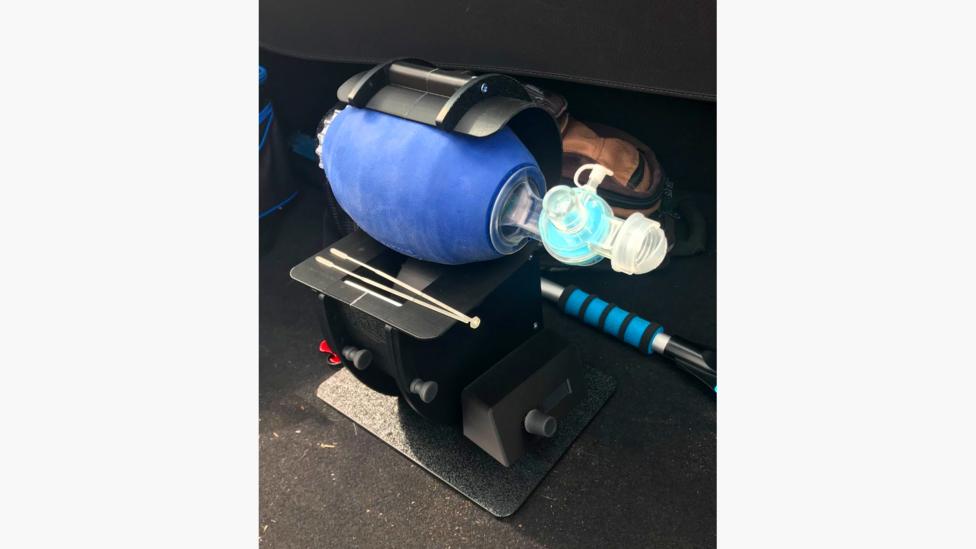
Many innovators in India are working on this Ambu Bag deign with improvements as an alternate to expensive ventilator. Brief history of this product.
The original bag-valve-mask concept was developed in 1953 by the German doctor Holger Hesse and his partner Danish anesthetist Henning Ruben, following their initial work on a suction pump. Their resuscitator, named “Ambu” (Artificial Manual Breathing Unit), was manufactured and marketed in 1956 by their company.

Ambu Bag
The Danish manufacturer, Testa Laboratory made the first commercially produced Ambu bags in 1957. The company later changed its name to Ambu International. Many other companies now also make self-inflating “bag and mask” resuscitators, like the one shown here. These have become standard equipment in ambulances, hospital emergency rooms, and patient rooms.
A dozen ventilator prototypes at different stages have been developed in March 2020 alone by teams in different countries – and organising on Slack channels, Facebook groups, and GitHub repositories.Some of the most basic open-source ventilator models are based on an ‘ambu-bag’.
The results of this review, however, found that the tested and peer-reviewed ventilator systems lacked complete documentation and that the current open systems that were documented were either at the very early stages of design or had undergone only early and rudimentary testing. With the considerably larger motivation of an ongoing pandemic, it is assumed these projects will garner greater attention and resources to make significant progress to reach a functional and easily replicated open source ventilator system. There is a large amount of technical future work needed to move open source ventilators up to the level considered adequate for scientific-grade equipment and further work still to reach medical-grade hardware. Future work is needed to achieve the potential of this approach not only on the technical side, but also by developing policies, updating regulations and securing funding mechanisms for the development and testing of open source ventilators for both the current COVID19 pandemic, as well as for future pandemics and for everyday use in low-resource settings.

WHO specifications-Products for Surveillance, Prevention & COVID 19

Download specifications:
WHO REFERENCE NUMBER: WHO/2019-nCoV/DCPv3/2020.4