Total Pageviews
Monday, July 20, 2020
How to identify the cow?
Independent innovator cheated - case from Sweden
Friday, July 17, 2020
Modified 5G standard developed in India, adopted by ITU
TSDSI has successfully introduced an indigenously developed 5G candidate standard, based on 3GPP Technology, at the International Telecommunications Union (ITU) in 2019 for IMT 2020 ratification. The TSDSI-RIT incorporates India specific technology enhancements that can enable longer coverage for meeting the LMLC requirements. The TSDSI-RIT, geared mainly to address the LMLC requirements, exploits a new transmit waveform that increases cell range developed by research institutions in India (IIT Hyderabad, CEWiT and IIT Madras) and supported by several Indian companies.
(https://tsdsi.in/indias-5g-technology-tsdsi-rit-moves-another-step-forward-at-itu/
Historical
milestones as narrated by Prof Kiran Kuchi,IITH:
2. 2011-2015 was a cool off period until TSDSI was born (Kumar first Chairman, Abhay Second and now Bhaskar 3rd Chairman of TSDSI). 5G NR standard development started at 3GPP 2016-18. Myself and Kultto made 30+ international trips to push a waveform designed to have large coverage (now morphed into LMLC). It took 3-years to push this tech into 3GPP.
Wednesday, July 15, 2020
PATENTING OF MICRO-ORGANISMS IN INDIA, HOME OF PIONEER Ananda Mohan Chakrabarty
The curious case of vanishing spray used in Football matches
Mr Allemagne said: 'We didn't respond. The figure was far too low. Grandona, FIFA's finance chief, later had a conversation with Pablo in which he told him not to worry, that after the World Cup the spray would be much more, at least £30million.'...
Patents and Additive Manuafcturing
Thursday, July 02, 2020
Tuesday, June 30, 2020
India announced draft guidelines for Drones
- Remotely Piloted Aircraft System (i.e. UAS piloted from a remote pilot station)
- Model Remotely Piloted Aircraft System (i.e. UAS operating without payload and used for educational or experimental purposes only within visual line of sight)
- Autonomous Unmanned Aircraft System (i.e. UAS that does not require pilot intervention in the management of the flight)
Analysis read : http://www.nishithdesai.com/fileadmin/user_upload/Html/Hotline/200701_REGTECH_M_Future_of_drones_in_India_UAS_rules_2020.html
Tuesday, June 23, 2020
Blogging and Copyright law
Read the post from Natalie Mootz.
Saturday, June 20, 2020
Wednesday, June 17, 2020
Sunday, June 07, 2020
COVID 19 research at IITS
- personal protection care equipment
- testing kit
- sanitization
- medical equipment/ robots
- surveillance
- treatment
- data analysis/AI.
Thursday, May 21, 2020
CDOT GPON Technology- developed, patented globally and transferred to industry- but not a success story
Wednesday, May 13, 2020
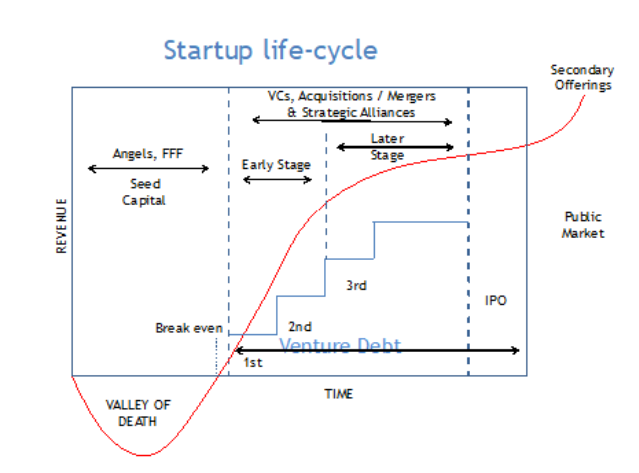
venture debt in India
Read article on Venture Debt in Economic Times prime (subscription required).
Also covered by Invest India. More at kauffman. And a legal perspective from Illinois.

Sunday, May 03, 2020
Will COVID change peoples behavior in India?- Nudge theory
Public policy examples of ‘Nudge’ at work include automatic enrollment of employees into pension schemes in the UK and the opt-out system for organ donation in Spain. By making the optimal choice the default option for all citizens, these nudges have helped improve public participation in these programes.
Friday, May 01, 2020
Government of India’s Measures to Boost Business, Improve EoDB & Welcome FDI During COVID-19
Thursday, April 30, 2020
Hand washing Compendium for Low Resource Settings: A Living Document
In response to the global COVID-19 pandemic, the Sanitation Learning Hub at the Institute of Development Studies has rapidly developed the Handwashing Compendium for Low Resource Settings that can be used to support increased access to facilities and promote positive handwashing behaviours.
The compendium provides guidance on low-cost handwashing facilities that can be widely used in low and middle-income countries. We hope that this can be shared extensively as governments and agencies tackle the crisis in low and middle-income countries where handwashing facilities are urgently needed in households, communities, schools and healthcare facilities.
The compendium includes information and further reading on: • Handwashing facilities – including facilities that are accessible for all. • Environmental cues to reinforce handwashing behaviours. • Physical distancing hygiene promotion.
Download report.
Wednesday, April 29, 2020
Natures UV light to UV-C LED for COVID 19
Monday, April 20, 2020
ARI researchers develop `Bug Sniffer'

Hot air sealing machine for PPE
Saturday, April 18, 2020
Hydrogen on Demand -long road to technology commercialisation.
Woodall moved to Purdue university and continued to work on the aluminium alloy. His team succeeded in developing technology that produces hydrogen by adding water to an alloy of aluminum and gallium. When water is added to the alloy, the aluminum splits water by attracting oxygen, liberating hydrogen in the process. The Purdue researchers are developing a method to create particles of the alloy that could be placed in a tank to react with water and produce hydrogen on demand. The Purdue Research Foundation holds title to the primary patent, which has been filed with the U.S. Patent and Trademark Office and is pending. An Indiana startup company, AlGalCo LLC., has received a license in 2007 for the exclusive right to commercialize the process.
AlGalCo founder and president Kurt Koehler is a businessman, not a chemist. He graduated with a degree in marketing and management from IU and went on to earn a Master's in European History. As luck would have it, an encounter with Purdue representatives at the Indiana State Fair piqued his interest and ultimately led him to Purdue professor Jerry Woodall, who had developed the aluminum alloy technology. After 14 years of beta testing product is rolled out for Carmel's city fleet.
Friday, April 10, 2020
THE LONG ROAD TO TECHNOLOGY COMMERCIALIZATION- CASE OF FUEL CELLS FOR TRUCK
Tuesday, April 07, 2020
Saturday, April 04, 2020
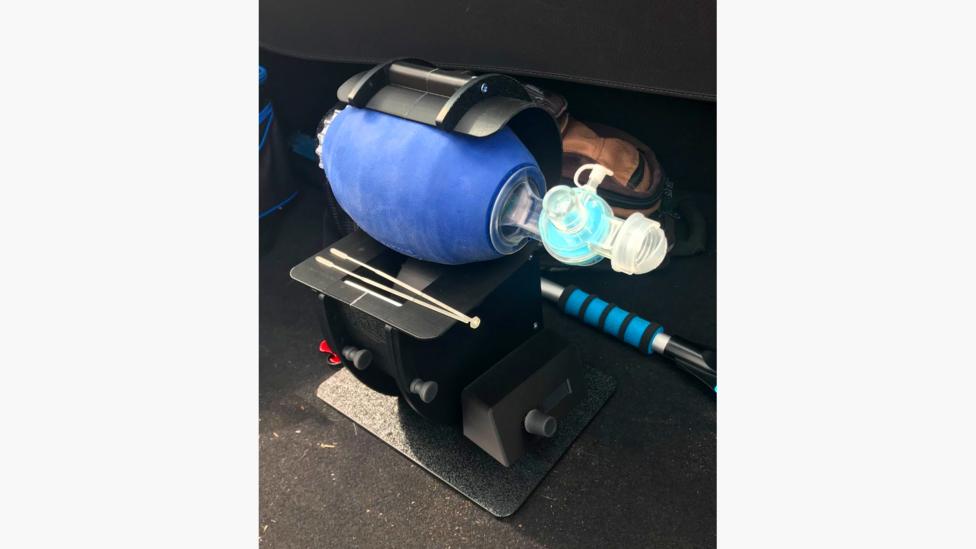
Ambu bag Ventilator gets new life with COVID 19


A dozen ventilator prototypes at different stages have been developed in
March 2020 alone by teams in different countries – and organising on
Slack channels, Facebook groups, and GitHub repositories.Some of the most basic open-source ventilator models are based on an ‘ambu-bag’.Guide to local production of WHO-recommended Handrub Formulations
Friday, April 03, 2020
Expression of Interest (EOI) for Co Developing and manufacturing Devices for COVID-19 Pandemic
- Ambu bag based Ventilator
- Ventilator Sharing Kit
- Battery Operated Assistive Breathing Unit
- Isolation Pods
- Disposable Safety Face Shield
- Deployable Field Units
For further details, please contact Technology Business Division : tbd@sctimst.ac.in
Call us : Mr S. Balram (9249402311)/ Ms Sandhya C.G (9895098086)
License to WIPRO 3D is in news.
Thursday, March 26, 2020
Working around strong patents - 3M vs Venus
In the year 2013, 3M successfully blocked Venus Safety & Helath private lts from manufacturing a product infringing its patent on “Flat Fold Personal Respiratory Protection Device'. (ref: https://indiankanoon.org/doc/194174010/)
Venus has been in this field long enough to learn to work around the patent. Today is is one of India's largest manufacturer of masks.
Sunday, March 22, 2020
Auditing the Auditor
A consultation paper to examine the existing provisions of law and make suitable amendments therein to enhance audit independence and accountability has been placed on the Ministry’s website at www.mca.gov.in. The paper states:
Broadly, the auditor’s financial or other interest in client’s business inappropriately influence his judgement or behaviour and a conflict of interest always exists, which may result in the auditor turning a blind eye to potential risk or at the extreme ignore an impending/occurred fraud. 2.1 There is self-interest threat due to reliance of auditor on the fee from the client. This is manifested in various ways and results in various negative consequences.
Economic Times dealt on response of big 4 audit firms- Thermometers cannot prevent heart attacks.
Read the worst 10 accounting frauds-https://www.accounting-degree.org/scandals/
Friday, February 14, 2020
Central Electronics Ltd (CEL) on sale.
Thursday, February 06, 2020
FDI in R&D in India-Reji K. Joseph, Biswajit Dhar & Akoijam Amitkumar Singh
MNCs using Indian talent for research but innovation comes out of development in other countries!!!
Is DSIR recognition relevant?
Interesting aspects highlighed in this paper.
1.RDFDI inflows into India during the period of analysis (2004-16) was Rs. 54862.6 Mn. This constitutes 0.4 per cent of total FDI inflows into India.
2. RDFDI was concentrated in four sectors—ICT, natural sciences and engineering (NSE), pharmaceuticals and clinical research, which accounted for more than 80 per cent of total RDFDI.
3. Only one‐fourth of RDFDI has come to DSIR recognised firms. None of the firms in the ICT sector, which received the maximum RDFDI inflows, has DSIR recognised in‐house R&D units.
4.The share of FDI companies in corporate sector R&D is only 3 per cent.
5. Data collected from USPTO on number of patents granted in which India is an inventor country and assignee country shows that there is a growing trend of companies based in foreign countries taking patent on the outputs of R&D conducted in India. Since 2002, there has been a steady decline in the share of India based inventions receiving India as the assignee country status. Of late, only 15 per cent of the patents granted by USPTO in which India is mentioned as an inventor country, having India as the assignee country; this share was 58 per cent in 2002.
Thursday, January 23, 2020
Tuesday, January 21, 2020
Sunday, January 19, 2020
Saturday, January 18, 2020
Thursday, December 12, 2019
Innovations in mining not related to production from mining
Australia, Canada, China, Europe and the United States of America concentrate the largest share of global innovation measured as mining R&D expenditures, exploration expenditures or mining technologies in patent data.
Our analysis showed how mining innovation spurs along the mining production lifecycle and value chain. In particular, recent mining innovation focused in exploration and refining technologies. However, some subsectors have contributed more to the recent mining innovation uptick more than others. In particular, there has been a decrease of the from refining technologies share in favor of those from exploration and transport technologies. We interpret these results as a direct consequence of the demand surge of mineral products in the same period. We also observe an increase of automation innovation in the mining sector. These trends are not new for the industry, which observed an increase in the 1990s and early 2000s. Nonetheless, we now observe a remarkable automation uptick.
The distribution of economies contributing to mining technologies does not corresponds with the typical mining producing ones. Only China and the United States of America lead both in mining output and innovation. Australia, Canada and Norway also offer a relatively balanced mining output and innovation. Other typical mining economies struggle to be present in the innovation spotlight. The Russian Federation, Brazil and Chile are probably the best among these, while the other ones generate very limited innovation outcomes.
Indeed, mining innovation is more likely to spur in functioning innovation systems not necessarily based on mining operation countries. Many developed economies not particularly relevant in mining production contribute in a great extent to the global mining innovation. Japan, the Republic of Korea and many European economies are the top ones among these.
Traditionally mining producing and specialized economies such as Chile, South Africa and the Russian Federation have all diminished their mining innovation specialization. Conversely, Australia, Canada, the United States of America and Brazil have increased their mining relative specialization, which also means the contributed more to the global mining innovation intensity surge. Most of the increase in the exploration subsector is coming from the increase in specialization. Australia, Chile and the Republic of Korea increased their relative specialization in this subsector and are probably among the largest contributors to the exploration booming relatively to the other sectors. On mining transport, Chile and Australia were the only country improving their mining transport specialization.
The US, Canada and Australia, are more specialized in automation compared to lower-middle income and uppermiddle income nations. The selected economies are fairly weak in environment specialization. Only Chile, the Republic of Korea and the United States of America show a positive RSI for environmental technologies.
SEPs in connected cars, connected homes.
Patented essential wireless technology will transform an automobile into a connected car, a meter into a smart meter, a house into a smart home – the product of today into that of tomorrow.
Avanci a patent pool firm offering SEPs for connected cars, connected homes, connected meters. Kasim Alfalahi is the Founder and CEO of Avanci. In his previous role as Chief Intellectual Property Officer for Ericsson, Kasim led the company’s licensing and patent development worldwide – an industry-leading practice he built over 20 years. During this time, he and his team established the concept of patents as marketable business assets, transforming Ericsson from a net-payer to a net-receiver of royalty income. Under his direction, patent licensing became fundamental to Ericsson’s global success – bringing in $1.7 billion in revenue in 2015.
Monday, December 09, 2019
IIIF2019-Report
The three day event was held in 10,000 sq.ft exhibition hall of NSIC located in Kushaiguda industrial area and attended by about 5,000 visitors who spent on the average 2hrs in the fair. Innovators from 25 countries, India, China, Macao, Philippines, Malaysia, Iran, Iraq, Syria, Lebanon, Morocco, Turkey, Zimbabwe, South Africa, Portugal, Germany, Poland, Serbia, Bosnia, Croatia, France, Romania, Moldova, Canada, USA and Brazil displayed their innovations. NOSTC selected 35 student innovators for this international fair from out of 100 finalists at National competition. They came from different parts of the country, Gujarat, Nagaland, J&K, Bihar, Delhi, Maharashtra, Chhattisgarh, Karnataka, Andhra Pradesh and Telangana.
The fair was inaugurated on 1st December by President of Indian Innovators Association, Dr ASRao, Dr Zengpei Xuan China, Edyta WoÅ‚czyk Poland, YS Rajan Head of International Jury and Jayesh Ranjan IAS, Principal Secretary to Government of Telangana, Industries & Commerce (I&C) Department, & Information Technology, Electronics and Communications (ITE&C) Department. After honouring jury and release of book `Creating Demand for Local Innovations’ Jayesh Ranjan talked briefly about initiatives of Telangana state in creating dynamic, vibrant environment for innovators & investors.