Total Pageviews

Sunday, October 11, 2020

German firm VERBIO Ag solves Delhi's smog problem with patented research and EU funded pilot plant in Germany.

Problem: 

Every winter, not just Delhi but also large parts of north India are frequently enveloped in a thick blanket of smog, caused by air pollution from vehicular and industrial emissions mixing with fog. The burning of post-harvest paddy stubble in the agricultural fields of Haryana and Punjab is often cited as a major cause of this unhealthy smog. In 2013, under the Air Act, 1981, the Punjab government banned the burning of crop residue in the fields. Later, in 2015, the National Green Tribunal prohibited the burning of paddy straw while directing the government to help farmers manage the paddy straw using specialised equipment like Happy Seeder that chops paddy straw, sows wheat seeds and layers the straw as a mulch. Other machines like Rotavator, that bundle the straw into bales to be transported, were also to be procured and used.


Solution:

VERBIO Vereinigte Bioenergie AG is a bio-energy company established in 2001 started with bioethanol in 2005. Applied for patent `Method and plant for producing biogas from lignocellulose-containing biomass' in 2012 (EP2935595A2), published in 2015 and granted in 2020. Main claim- 1. A process for the production of biogas from lignocellulosic biomass, preferably from straw, which comprises the following steps:  a) mixing the lignocellulosic biomass with a  average particle size less than 200mm, preferably less than 20mm, with aqueous solutions at a temperature of 60-100 ° C, in particular from 70-85 ° C, in particular with process water and / or with the aid of steam;  b) heating the lignocellulosic biomass to 130-200 ° C,  preferably 150-180 ° C, and lingering so heated  lignocellulose-containing biomass for a period of 5-120min, preferably 10-30min, expediently in a continuously flow-through reactor space for thermal digestion  c) anaerobic fermentation of the thermally treated lignocellulosic biomass using microorganisms and recovery of the resulting biogas.


Within the framework of the EU funding programme NER300 the European Union supports the further development of VERBIO’s innovative technology to produce biomethane from 100% straw at it’s production site in Schwedt/Oder with up to EUR 22.3 million during 2014 – 2019. The funding amount is based on a fixed rate for biomethane fed into the gas grid.


The Union government is setting up the first compressed biogas (CBG) plant in north India in Lehragaga of Sangrur and it is expected to be commissioned in March next year. The CBG plant, being set up under the ‘Sustainable Alternative Towards Affordable Transportation (Satat), will convert straw into CNG. According to sources, the plant authorities have started collecting paddy straw to store it at the plant, as 300 tonne stubble will be used per day in the plant to produce 31 tonne CBG per day. The plant is being set up by Verbio India Pvt Ltd.

Primer on atmospheric water harvesting technologies

Indian Prime Minister Modi was reported enquiring whether a turbine could be used to harvest water from moisture in the air and oxygen too, thus serving as a three-in-one machine. Three components of the system , Wind mills, Atmospheric water generator, Water splitting to produce Oxygen, Hydrogen are well known.

Here we look at review paper on atmospheric water harvesting technologies.

The scope of this paper is to review different types of sustainable water harvesting methods from the atmospheric fogs and dew. In this paper, we report upon the water collection performance of various fog collectors around the world. We also review technical aspects of fog collector feasibility studies and the efficiency improvements. Modern fog harvesting innovations are often bioinspired technology. Fog harvesting technology is obviously limited by global fog occurrence. In contrast, dew water harvester is available everywhere but requires a cooled condensing surface. In this review, the dew water collection systems is divided into three categories: i) dew water harvesting using radiative cooling surface, ii) solar-regenerated desiccant system and iii) active condensation technology. The key target in all these approaches is the development of an atmospheric water collector that can produce water regardless of the humidity level, geographical location, low in cost and can be made using local materials.


Wednesday, October 07, 2020

Premature Deindustrialization, India and South Africa

 Dani Rodrik introduced the concept of Premature deindustrailisation. (https://drodrik.scholar.harvard.edu/files/dani-rodrik/files/premature_deindustrialization.pdf)

The term deindustrialization is used today to refer to the experience mainly of these advanced economies.In the United States manufacturing industries’ share of total employment has steadily fallen since the 1950s, coming down from around a quarter of the workforce to less than a tenth today.In Great Britain, at the other end of the spectrum, deindustrialization has been both more rapid and thorough. Manufacturing’s share of employment has fallen from a third in the 1970s to slightly above 10 % today, while real MVA (at 2005 prices) has declined from around a quarter of GDP to less than 15 %. Developing countries are turning into service economies without having gone through a proper experience of industrialization and this is called  “premature deindustrialization". Developed countries face unemployment deindustrialization without output deindustrialization.As developing countries opened up to trade, their manufacturing sectors were hit . Those without a strong comparative advantage in manufacturing became net importers of manufacturing, reversing a long process of import‐substitution.

Premature Deindustrialisation in India was studied by Sudip Chaudhuri. (Sudip Chaudhuri. Premature Deindustrialization in India and Re thinking the Role of Government. FMSH-WP-2015-91. 2015.)  In India , the share of manufacturing in GDP has stagnated around 15-16% since 1991. The share of manufacturing in GDP is 31% in Korea and 30% in China. Even Germany with much higher wage costs has a share of 21%. If domestic manufacturers are unable to withstand international competition and if domestic users start relying on imports, then what follows is not better utilization of existing capacities and greater efficiency but under utilization of existing capacities, decrease in production and rise in unemployment. Decay of existing industries which are unable to survive without protection does not automatically lead to the creation of new capacities in new industries.

Is sub-Saharan Africa deindustrializing is paper by Emmanuel B. Mensah (UNU MERIT working paper #2020-045. Important finding- East Africa is industrializing, whereas Southern Africa is the only region that seems to be deindustrializing.imports from both the North and South have negative effect on relative manufacturing employment suggesting that the competition effect is stronger than the spillover effect in the context of Africa. African countries can offset the negative effect through competition policies such as subsidies and local content laws that have minimum requirements for the procurement of locals and services, local employment opportunities, technology, and skill transfer, etc. Finally, as the results of the drivers show, promoting manufacturing exports is important for the industrial development of the continent.

Tuesday, October 06, 2020

National Clinical Management Protocol based on Ayurveda and Yoga for management of Covid-1 9

 This consensus document is developed by expert committees from All India Institute of Ayurveda (AMA), Delhi, Institute of Post Graduate Training and Research in Ayurved (IPGTRA), Jamnagar, and National Institute of Ayurveda (NlA), Jaipur Central Council for Research in Ayurveda (CCRAS), Central Council for Research in Yoga and Naturopathy (CCRYN), other national research organizations. This protocol is for management of mild COVID-19. Moderate to Severe COVID-19 individuals may have informed choice of treatment options. All severe cases will be referred. General and Physical measures 

1. Follow physical distancing, respiratory and hand hygiene, wear mask 

2. Gargle with warm water added with a pinch of turmeric and salt. Water boiled with Triphala (dried fruits of Emblica officinalis, Terminalia chebula, Terminal/a bellerica) or Yashtimadhu (Glycyrrhiza glabra) also can be used for gargling. 

3. Nasal instillation/application of medicated oil (Anu taila or Shadbindu Taila) or plain oil (Sesame or Coconut) or nasal application of cow's ghee (Goghrita) once or twice in a day, especially before going out and after coming back to home. 

4. Steam inhalation with Ajwain (Trachyspermum ammi) or Pudina (Mentha spicata) or Eucalyptus oil once a day 

5. Adequate sleep of 6 to 8 hrs. 

6. Moderate physical exercises 

7. Follow Yoga Protocol for Primary Prevention of COVlD-19 (ANNEXURE-1) and Protocol for Post COVlD-19 care (including care for COVlD-19 patients) (ANN EXURE-2) - as applicable 

Download report: 

Sunday, October 04, 2020

CRISIS TRIGGERED INNOVATIONS FROM INDIA

Beginning of COVID 19, expectations are rampant on India resorting to compulsory license to protect its large population from virus carnage. Also price controls on drugs and medical devices seemed to work against Indian patients getting proper healthcare based on new technologies. But what happened was different- it seems COVID crisis spurred Indian innovators into action mode with flood of innovations emanating from India. What factors worked as enablers? Is it sustainable? Has India finally discovered mantra for innovation!

Download Paper from SSRN .(https://papers.ssrn.com/sol3/papers.cfm?abstract_id=3701450)

Friday, October 02, 2020

PERFORMANCE EVALUATION OF COMMERCIAL KITS FOR REAL TIME PCR FOR COVID BY ICMR IDENTIFIED VALIDATION CENTRES

 Till end of September 255 RT-PCR kits have been evaluated by ICMR validation centres, and 126 were found to be satisfactory. They include kits developed in India, Korea, UK, China, Turkey, Italy, Iran, Finland, Japan, Singapore, France, Taiwan, Czech republic and Russia. Real-Time PCR kits which are US-FDA can be used directly after due marketing approval from DCGI.

Check ICMR approved kits here.

Thursday, October 01, 2020

Solutions Library at Engineering For Change

Engineering for Change (E4C) mission is to prepare, educate and activate the international engineering workforce to improve the quality of life of underserved communities around the world. We do this by providing resources and platforms that accelerate the development of impactful solutions and ensure public health and safety around the globe.


The E4C Solutions Library is a living database of products and services that are intended to be accessible and appropriate for those living in resource-constrained environments. The data in the Solutions Library is curated technical and market performance information that is normalized across all products, enabling side-by-side comparison and analysis of market influences.

Check the data base: https://www.engineeringforchange.org/solutions/products

Emergency Global Supply Chain System (COVID-19) catalogue

 The following catalogue lists all medical devices, including personal protective equipment, medical equipment, medical consumables, single use devices, laboratory and test-related devices that may be requested through the COVID-19 Supply Portal.

https://www.who.int/publications/i/item/emergency-global-supply-chain-system-(covid-19)-catalogue


Sunday, September 27, 2020

Agriculture Technologies on offer from ICAR labs

Processes for formulation of donkey-milk based cosmetic products – bathing soap, body butter, lip balm

In view of the promotion of donkey milk along with generating awareness among equine farmers and donkey keepers for benefits of donkey milk and getting economic gain from it, ICAR-NRCE has standardized the formulations and technology for production of Donkey milk-based soaps, body butter and lip balms. The soaps were made by HP and CP methods utilizing the benefits of olive oil, coconut oil, castor oil and essential oils along with other key ingredients. Fresh frozen donkey milk and freeze-dried donkey milk was used for making the formulations and soaps have been tested for organoleptic properties, cleansing, and lathering properties. The body butter was made by using freeze-dried donkey milk, beeswax, coconut oil, clarified butteroil, Shea butter, vitamin E and aloe vera gel along with essential oils and lip balms were made by using freeze-dried donkey milk, coconut oil, clarified butteroil, shea butter, vitamin E and sweet almond oil along with essential oils.

This is one among the many technologies on offer from ICAR labs.

Check technologies http://www.agrinnovateindia.co.in/technologies


Friday, September 18, 2020

HOW INDIA REDUCED PATENT APPROVAL PERIOD FROM 80 MONTHS TO 8 MONTHS

 Indian patenting process received much flak for long period and stringest criteria for innovative step. While not diluting position on incremental innovations, computer related innovations, genetically modified seeds/ plants/ organs, Government of India has taken several steps to benefit startups, defined as firms within Rs 100 crore turnover. In addition to liberal funding and tax benefits, the Government announced 80% rebate in patent filing fees and 50% rebate in trademark filing fees. Large number of Patent facilitators(425) and Trademark facilitators (606) have been empaneled under this scheme to provide free-of-charge services to Startups. Additionally, Startups are considered for expedited examination of patent applications to reduce time taken in granting patents. This paper summerises Indian patent system drawing out negative list, explains the patenting methodology, analyses impact of pre-grant opposition and closes with remarkable turnaround with provision for expedited examination.

Download paper: https://papers.ssrn.com/sol3/papers.cfm?abstract_id=3694424

Wednesday, August 19, 2020

Global Innovations for Local Entrepreneurs


COVID crisis has seen a sudden spurt in innovations and technology licensing in India. 

Is the market for technology trade coming of age? Download presentation.

Friday, July 31, 2020

CSIR Technologies for COVID-19 Mitigation, July 2020

CSIR has developed several COVID-19 focused technologies and products ranging from sanitizers & masks to improved tests and diagnostics and ventilators, buildings and structures. The technologies, products and processes listed in the compendium are available for non-exclusive technology transfer. Out of 105 technologies and products in this compendium, 58 have been transferred to various industry partners. For the others, the technologies are in different stages of readiness, the most basic being a working prototype. Interested start-ups and industries may contact the concerned CSIR laboratory for further discussion, and technology transfer.
The updated list includes:
  • Rapid and Economical Diagnostics (7),
  • Development of Repurposed Drugs/New Drugs & Vaccine (8),
  • Hospital Assistive Devices and Personal Protective Equipment (PPE) (49),
  • Supply Chain & Logistics Support Systems (3)

Telemedicine and telehealth

The guidelines in the 2020 document distinctly define the concepts of telemedicine and telehealth.

Telemedicine: The delivery of healthcare services, where distance is a critical factor, by all healthcare professionals using information and communication technologies for the exchange of valid information for diagnosis, treatment and prevention of disease and injuries, research and evaluation, and for the continuing education of health care providers, all in the interests of advancing the health of individuals and their communities. 

Telehealth: The delivery and facilitation of health and health-related services including medical care, provider and patient education, health information services, and self-care via telecommunications and digital communication technologies. The categories of medicines that can be prescribed are :

List O: It will comprise those medicines which are safe to be prescribed through any mode of tele-consultation. In essence they would comprise of o Medicines which are used for common conditions and are often available ‘over the counter’. 

List A: These medications are those which can be prescribed during the first consult which is a video consultation and are being re-prescribed for re-fill, in case of follow-up.

List B: Is a list of medication which RMP can prescribe in a patient who is undergoing follow-up consultation in addition to those which have been prescribed during in-person consult for the same medical condition.

Yet to come are guidelines on Data Protection and Doctors' liability.

Ministry of Health and Family Welfare drafted the Digital Information Security in Health Care Act to secure confidentiality and privacy in health-care systems. Meanwhile, the judiciary has attempted to safeguard an individual’s right to privacy. In Justice K.S. Puttaswammy v Union of India, it was held that right to privacy was a facet of Article 21 of the Indian Constitution. It further held that “the right of an individual to exercise control over his personal data and to be able to control his/her own life would also encompass his right to control his existence on the internet.” 

On Doctors' liability -The conduct of medical malpractice was brought under the Consumer Protection Act, 1986, due to the landmark case of the Indian Medical Association vs. V. P. Shantha & others, The judgment in this case defined medical care as a “service” that was covered under the Act, and also clarified that a person seeking medical attention may be considered a consumer if certain criteria were met.


Saturday, July 25, 2020

Development of the Farm Machinery Industry in Japan : A Case Study of the Walking Type Tractor

Indian Government is reported contemplating restriction on import of Chinese Power Tillers. India has been assembling power tillers for decades and most of them are based on Japanese technology.
This case explains how Japan developed Power Tiller/ Walking type tractor.

The evolution of the walking type tractor occurred in three phases. The first phase involved the actual transfer of technology from abroad. Garden tractors such as Bee Man, Utilitar and Simar were imported in the early 1920s and demonstration of cultivation was performed in some prefectures. The imported tractors turned out to be inappropriate for the natural, economic, and social conditions of Japanese agriculture. The import of garden tractors thus ended within a short period. The second phase saw the invention of a Japanese type tractor called the "power tiller." It incorporated some of the designs of imported garden tractors built before World War II. The power tiller was subject to several defects and was used only in limited areas. This led to the third phase in which walking type tractors were invented and widely diffused. These tractors signified the completion of an appropriate technology for Japanese agriculture. The defects of the power tillers were corrected and hand tractors and tailor type tractors were also developed with reference to imported garden tractors. The quality of these walking type tractors were good enough to replace draft animals completely. These walking type tractors were diffused at a high speed and reached their peak in 1974 when 3.4 million such tractors were in use in Japan. Export of the walking type tractors started increasing in the mid-1960s. In 1982 about 30 percent of the total production of walking type tractors was exported. 

The Role o the Public Sector in the Development f of the Walking Type Tractor
 Pre-War period:  an agricultural experiment station carried out a comparative examination of imported garden tractors in 1922. Although the results of the study suggested that imported garden tractors were not well suited to Japanese agriculture, the study made clear the importance of developing a cultivating machine which was adapted to local agricultural conditions. Secondly, the Ministry of Agriculture and Forestry promoted the diffusion of the power tiller by holding national machinery and implements fairs.
Post-war period:With the enactment of the Farm Mechanization Promotion Law in 1 9_ 53, the farm machinery testing scheme was legalized.Secondly, the Ministry of Agriculture and Forestry entrusted the Okayama Prefectural Experiment Station to conduct research on small-scale power tillers from 1947~48. In this way, the transmission clutch was improved and engines were made smaller and lighter. 
Down load the paper.

Friday, July 24, 2020

Interview at Medcircle on future of innovations in new normal.


During the COVID crisis, the flood of innovations from Face masks to testing has 5 enablers.

  • Standards, WTO & ICMR,
  • Testing and validation at DRDO and other places,
  • Local demand, especially public procurement,
  • Freedom to Operate from Patent perspective,
  • Capability to come with creative imitations, catch up products in a speedy manner.

We expect innovations to flourish in New Normal where the 5 enablers exist,” he says.


Agree???

Read full interview

Tuesday, July 21, 2020

Using Inventions in the Public Domain- WTO guide

Developing New Products- there are millions of patents free to use in India. That is knowledge on tap.

Information and knowledge in published patents and patent applications plus other public domain knowledge can be utilized to help conceive, refine and/or formalize a concept for a product, protect the idea for a product and map its path to commercial viability.
This guide is organized in three distinct modules that review and explore the applicability of information from inventions in the public domain. The modules are as follows:
MODULE I Review of the public domain as a function of geography and time, with a focus on: (1) the public domain in developing and least developed countries and (2) the relationship between patents and the public domain.
MODULE II Exploration of public domain knowledge in patents, the relationship between patents and other intellectual property rights, and using the insights gained to find opportunities to leverage existing inventions and public domain knowledge for facilitating business success.
MODULE III Using and integrating public domain knowledge in product development processes from an idea’s conception to its analysis, design, testing, market launch and post-launch analysis for continuous improvement.
Download the guide.

Identifying Inventions in the Public Domain- WIPO Guide

A public domain invention is a publicly disclosed invention not covered by any enforceable patent rights in a specific country, at a defined time, such that anyone may freely use that invention in that country at that time, without liability for patent infringement. Using this conceptual framework, the guide teaches you a three-stage process for searching and analyzing published patent documents using the tools of freedom to operate (FTO) determination.
DESCRIBE (Module II)  – Gather information from the client about the invention: · What is the invention and what does the client plan to do with it? · Where does the client plan to use the invention?  When does the client plan to use the invention? – Describe the invention and its planned use. 
SEARCH (Module III)  – Break down the invention into parts and identify features to search. – Choose search parameters and resources: keywords; patent classification symbols; databases; countries; year(s); language(s). – Search for patent documents with claims that might cover the invention or one of its essential features, and identify potentially relevant documents to analyze.
 ANALYZE (Module IV) – Analyze each potentially relevant patent document: · Analyze claims to determine the scope of patent rights. Could a claim be interpreted in such a way that it might be found to cover the invention or one of its essential features? Yes/No/Cannot determine. · Determine the legal status of each analyzed patent. Is it still in force? If so, where is it enforceable and for how long? If not, is it expired, abandoned, invalidated, disclaimed or revoked? Is the legal status ambiguous or unsettled?

Monday, July 20, 2020

How to identify the cow?


Farmers never had any problem in identifying their cattle, many were even give names like pet dogs. The problem is different with bureaucrats, bankers, insurance companies- to them all cows look the same. 

One the tourist attraction for foreigners in Delhi is sight of stray cattle and they do not miss an opportunity to take photo. Obviously governments think it is a bad publicity for the nation and regularly introduced schemes to control population of stray cattle on streets. Delhi government hired about 150 stray cows’ catchers who are supposed to bring 10 cows per day. These people know that of all the cows are removed they will eventually they will lose their job. Due to the corruption, these stray cattle often make their way back on street and are often caught multiple times.
Under PATSER we supported one project for tagging the cows with RFID, even after 15 years it is still a major issue- in 2019 under smart city project Ahmadabad had taken a project to insert RFID tags in 70 bovines per week.
Now comes Facial Recognition technology from startup Moofaram, Mantra.  Egyptian scientists have developed a computer-based technique to identify cattle using nose prints.


Independent innovator cheated - case from Sweden


Stefan Hultberg is a Swedish inventor who presented his idea about secure bank identification in 2007. It turned out that it was rather early for his idea, as the concepts of mobile apps and security did not yet go together. In 2010 Stefan made a new attempt. His idea was different, as it built mainly on software development, while the technologies banks were using at the time included sim-cards and sms communications. Stefan's company, Accumulate, started a pilot project together with the banks' jointly owned company, Finansiell id-teknik. Accumulate received some compensation for this pilot project but this was not even sufficient to cover the firm's own costs—they had no less than 15 patents registered for this solution. Stefan Hultberg suggested a licensing model which entailed that each user pay some sort of royalty fee for using the app. The banks did not agree. During this time, Accumulate had had meetings with the banks where details about how the solution worked had been revealed—including details about the source code under the protection of non-disclosure agreements. In autumn 2010 Finansiell id-teknik announced they were not interested in Accumulate's idea and that they would build their own system. Stefan Hultberg claims that this is an identical copy of the system suggested by Accumulate. In 2017 the Swedish Patent and Market Court accused Finansiell id-teknik of patent infringement. 

Friday, July 17, 2020

Modified 5G standard developed in India, adopted by ITU


TSDSI has successfully introduced an indigenously developed 5G candidate standard, based on 3GPP Technology, at the International Telecommunications Union (ITU) in 2019 for IMT 2020 ratification. The TSDSI-RIT incorporates India specific technology enhancements that can enable longer coverage for meeting the LMLC requirements. The TSDSI-RIT, geared mainly to address the LMLC requirements, exploits a new transmit waveform that increases cell range developed by research institutions in India (IIT Hyderabad, CEWiT and IIT Madras) and supported by several Indian companies.

(https://tsdsi.in/indias-5g-technology-tsdsi-rit-moves-another-step-forward-at-itu/

Historical milestones as narrated by Prof Kiran Kuchi,IITH:

 1. Meity funded CEWiT at IITM around 2005 (Bhaskar, Jhunjhunwala and Co.) I joined CEWIT in Jan 2008. Phase-1 of Indian crack at Standards Essential Patents (SEP) started with a 4G version of WiMax. Myself, Klutto and others at CEWIT developed first set of WiMax centric SEPs incorporated into IEEE 802.16m (4G version of WiMax) between 2008-11. WiMax did not take off and those efforts did not pay off at first.

2. 2011-2015 was a cool off period until TSDSI was born (Kumar first Chairman, Abhay Second and now Bhaskar 3rd Chairman of TSDSI). 5G NR standard development started at 3GPP 2016-18. Myself and Kultto made 30+ international trips  to push a waveform designed to have large coverage (now morphed into LMLC). It took 3-years to push this tech into 3GPP.

 3. 2018-20 LMLC (large cells + the waveform introduced by our team at 3GPP etc) concept introduced first at TSDSI SG1 then pushed through ITU by Prof. Ganti and team over 2-years, with support from TSDSI, DOT, IITs.

 4. Some 20 patents cover the essential aspects of this waveform that is now part of TSDSI ITU spec and also part of 3GPP rel-15,16/17.

 5. About 10-15 years from concept to standardization. Qualcomm and others have implemented this tech in 5G phones but Nokia and Ericsson had been adamant to include in the base station. I am sure with TSDSI spec approved at ITU. It will get into these networks as well. Another year to two before you see this on the field.

 6. I would like further add that Satish Jamadagni VP at Jio, vice chairman TSDSI, supported this effort by cosigning some 100 contributions at 3GPP, back channeling with MNCs several times. I must say that he convinced  Jio to  support this Indigenous effort. I worked very closely with him for about 4 years on this project...


Wednesday, July 15, 2020

PATENTING OF MICRO-ORGANISMS IN INDIA, HOME OF PIONEER Ananda Mohan Chakrabarty


Prior to 1980, Inventions pertaining to microorganisms and other biological entities were subject to product patents in India i.e patents were granted for processes and products obtained using microorganisms but no patents were given for microbes as such. Louis Pasteur received a U.S. Patent No 141072 for process of fermenting beer but no patent was given for the living entity “yeast” per say. However, in 1980, Ananda Mohan Chakrabarty developed a “genetically modified” bacterium capable of breaking down crude oil.  This property of degrading crude oil was not not found in the naturally occurring bacteria and thus this invention was thought to have significant value for cleaning up oil spills. With effect from 20.05.2003 India has started granted patents in respect of invention related to microorganisms.
When an invention involves a microorganism, completely describing said invention in the description to enable a third person put the invention into practice becomes difficult.  It would be virtually impossible to describe the microbial strain, its isolation, selection and modification to guarantee that the other person will obtain the same strain from the same environment. In such a situation, the microorganism itself will form an essential part of the disclosure and a sample of the microorganism must be deposited in a recognized institution for its availability to the public. The depositor should, in particular, ensure that the deposit is made in the name of the applicant for the patent and a sample of the microorganism is deposited to an International Depositary Authority before filing the patent application. There should be sufficient time for delays in the mail or customs formalities (if the sample is being sent by mail). If the sample is found to be non-viable by the International Depositary Authority (IDA), a replacement sample has to be provided by the applicant for the patent.
Two microbial culture collections have acquired status of IDA:
(a)    Microbial Type Culture Collection and Gene Bank (MTCC), Chandigarh, UT, India
(b)   Microbial Culture Collection (MCC), National Centre for Cell Sciences, Pune, Maharastara, India
MTCC chrages one time fee for such a deposit.
·        Non-Profit organizations: The depositor has to pay a one time fee of Rs.20,000/- PER CULTURE (Rs.15,000 deposit fee + Rs.5,000/- for making ampoules) + 18.00% GST.
·        Commercial organizations: The depositor has to pay a one time fee of Rs.25,000/- PER CULTURE (Rs.15,000 deposit fee + Rs.10,000/- for making ampoules)+ 18.00% GST.
Example: Patent Number 251658: a novel microorganism which is suitable for the production of hydrogen. This organism is a strain of Thermoanaerobacterium thermosaccharolyticum under the deposition number FERM BP-10793 or its variant.

The curious case of vanishing spray used in Football matches

Since the first use of vanishing spray in a Fifa World Cup match, the beautifully simplistic, potentially universal addition to the game has continued to feed into evermore leagues around the world. 
Pablo Silva, an Argentine entrepreneur and journalist patented it -US20120148741A1/Allemagne was the first to start working on the problem in 2000. Both became partners in 9:15 Fair Play.  It took six years of lobbying by Allemagne and Silva, eventually resulting in the International Football Association Board, who oversee the game’s rules, approving the spray for widespread use, in March 2012. In 2013, the Club World Cup in Morocco would be the final testing ground for Fifa to grant the spray approval for the 2014 World Cup. 
As per reports financial rewards were nonexistent: “The sprays for the World Cup were given for free. Fifa only gave me two tickets for the final of the World Cup for retribution ... The inventors also charged FIFA with stealing their idea, not paying them but licensing imitations from several parts of the world...
Quoting from daily mail...Five months before the World Cup, Mr Allemagne and his Argentinian business partner Pablo Silva received a written proposal from Thierry Weil, FIFA's marketing director, offering to buy his invention for £380,000.

Mr Allemagne said: 'We didn't respond. The figure was far too low. Grandona, FIFA's finance chief, later had a conversation with Pablo in which he told him not to worry, that after the World Cup the spray would be much more, at least £30million.'...


Patents and Additive Manuafcturing

AM brings together different technologies, some of which have existed since the 1950s: computer-aided design (CAD), computer-aided manufacturing (CAM), laser and electron energy beam technology, computer numerical control (CNC) machining and laser scanning. Applying these technologies to a variety of materials led to the start of a whole new industry at the end of the 1980s, generating a growing number of patent applications. The commercial use of AM emerged in 1987 with 3D Systems’ stereolithography (SLA), a process that solidifies thin layers of ultraviolet (UV) light-sensitive liquid polymer using a laser. The last 30 years have witnessed the growth of AM into a fully fledged industry.

 Initially, AM was almost exclusively used for producing prototypes, and it soon became well 
established in that field. It has since been deployed to make end-products, and this is where the sector reveals its strongest growth potential. AM can provide complex intermediate components and final products that in the past could only be made by hand or by several consecutive work steps. As almost any geometric form can be produced by AM, the technology is now used predominantly for small series of highly complex components. However, the shift from prototyping to end-product manufacturing requires further development in the sectors of hardware, e.g. printers and printing methods design and print software as well as materials used in printing.

Twenty-five companies accounted for about 30% of all AM patent applications filed with the EPO between 2000 and 2018. They include large companies from a range of sectors, including transportation, chemicals and pharmaceuticals, information technology, electronics, imaging and consumer goods, as well as pure 3D-printing specialists such as Stratasys, 3D Systems and EOS. The US and Europe dominate the ranking, with 11 US companies and eight European companies in the top 25 applicants. Of the top European applicants, five are German companies.

Download report.

Thursday, July 02, 2020

Patents and COVID innovations


COVID Crisis unleashed creativity of Indian Researchers and Innovators like never before. Is India becoming an Innovation nation?  
Here, we look at basics of IPR and some of the COVID 19 innovations.

Tuesday, June 30, 2020

India announced draft guidelines for Drones

The Draft UAS Rules goes on to categorize UAS into the following:

  1. Remotely Piloted Aircraft System (i.e. UAS piloted from a remote pilot station)
  2. Model Remotely Piloted Aircraft System (i.e. UAS operating without payload and used for educational or experimental purposes only within visual line of sight)
  3. Autonomous Unmanned Aircraft System (i.e. UAS that does not require pilot intervention in the management of the flight)
Copy of gazetted notification available.
Analysis read : http://www.nishithdesai.com/fileadmin/user_upload/Html/Hotline/200701_REGTECH_M_Future_of_drones_in_India_UAS_rules_2020.html

Tuesday, June 23, 2020

Blogging and Copyright law

Most bloggers wish to achieve great things with their blogs. However, it’s useful to know that fame (or notoriety) can leave you at the mercy of digital thieves looking to make a quick buck off of your hard work. Although you don’t need to be paranoid, it’s good to know which avenues for redress are available to you if someone does try to nab your stuff. Additionally, the golden rule applies when considering using someone else’s work on your blog; treat their work as you would have your own work treated.

Read the post from Natalie Mootz.

Sunday, June 07, 2020

COVID 19 research at IITS

Consolidated information on all IITs available. The list includes

  • personal protection care equipment
  • testing kit
  • sanitization
  • medical equipment/ robots
  • surveillance
  • treatment
  • data analysis/AI.

Thursday, May 21, 2020

CDOT GPON Technology- developed, patented globally and transferred to industry- but not a success story


C-DOT's GPON (Gigabit Passive Optical Network) technology offers an excellent mix of triple play services (voice, data & video) to end users. This is an indigenous development of C-DOT and offers advantages in terms of appropriateness for Indian environment, Innovation & local manufacturing. Current technology delivers a downstream data rate of 2.5 Gbps and an upstream data rate of 1.25 Gbps on a single fibre over a distance of up to 60 Kms. One optical fiber from OLT can be shared with up to 128 users. Signals from the OLT to the ONT are encrypted (secure) and then broadcasted to workstation devices. Signals from the workstation devices are then multiplexed back to the OLT.
In 2011, Indian Minister for Communications and IT Kapil Sibal,  transferred Gigabit Passive Optical Network (GPON) Technology to seven telecom manufacturers in public and private sectors – Indian Telephone Industries Ltd. (ITI), Bharat Electronics Ltd (BEL), VMC Systems Ltd, United Telecoms Ltd. (UTL), Sai InfoSystem (India) and S M Creative Electronics Ltd . In addition, Technology transfer agreement has also been signed with Tejas Networks Limited for customized development and Electronics Corporation of India Ltd (ECIL). US patent (Patent number: 10567075) for GIS based centralized fiber fault localization system was filed in 2016 and received in 2020.
Adoption of GPON in enterprise environment was studied by Stanislav Milanovic. Applied GPON based POLs in the enterprise environment enabled the convergence of voice, data and video onto a single strand of single mode fiber, which reduced the network infrastructure hardware to a fraction of what is required in terms of cabling and electronics in the conventional Ethernet approach. The solution not only enabled easier maintenance, but also improved efficiency with regard to end user-related, adds, moves and changes. Deployed GPON based POLs in the enterprise environment extended service to any stationary Ethernet end point. It enabled the delivery of reliable and highly secure unified network providing IP voice, data, and any type of video over a single fiber. It also increased the size of the network building block which greatly simplified enterprise network deployment, operation, and management. The solution supported energy conservation, since the optical LAN infrastructure utilized passive components like optical distribution hubs and fiber plant that required no power or cooling, resulting in significant energy savings. Implemented POLs provided immediate return on investment and a low total cost of ownership compared to copper-based LANs.
GPON Vs EPON
EPON and GPON have their own advantages and disadvantages. GPON is better than EPON from the performance index. However, EPON has the advantage of time and cost. GPON is catching up and looking forward to the future broadband access market. GPON will be more suitable for customers with high bandwidth, multi-service, QoS and security requirements and ATM technology as the backbone. For cost-sensitive, QoS, security, less demanding customer base, EPON has become dominant.
EPON began massive deployments in Japan and  South Korea. In 2005, China Telecom started EPON field trial in 4 provinces to learn how to deploy EPON. Interoperability is critical for the success and deployment of  EPON widely, so China Telecom started IOP research in 2005. In 2007 CTC achieved large scale and all‐round chip and system  EPON IOP the first time in the world (3 chip vendors, 10 system  vendors). For operators with 1G EPON-based deployments — particularly Korea Telecom, Japan‘s NTT DOCOMO access, China Telecom and China Unicom, 10G EPON is quickly becoming the next-generation technology of choice for providing both asymmetric and symmetric 10 Gbps services. 10G EPON equipment shipments and revenue continue to grow, driven currently by China Telecom, which is in the process of upgrading a portion of its first-generation 1G networks to provide more bandwidth to multi-dwelling units, or MDUs.
EPON technology matured with Chinese Telecom service providers active participation. What about Indian Scenario?


Wednesday, May 13, 2020

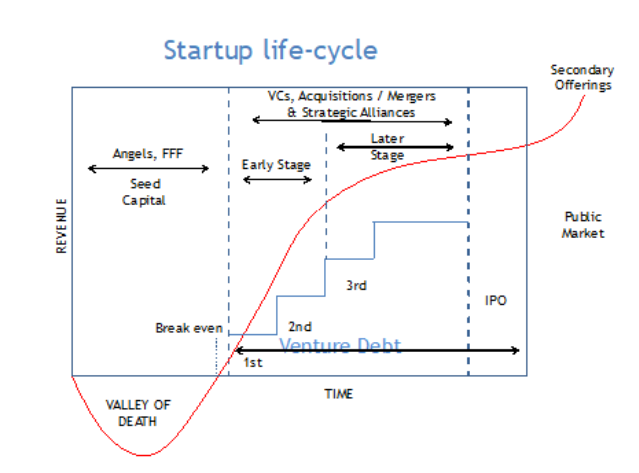
venture debt in India

Venture debt was introduced in India 15 years ago. However, it has gained traction in the last decade. In these years, the Indian debt market for startups has been dominated by the likes of funds such as Alteria capital, Innoven capital and Trifecta capital. These firms combined have deployed approximately $300 mn (INR 2,200 crores) in startups such as Bigbasket, Curefit, Ninjacart, Dunzo and Lendingcart to name a few. In the last 6 years itself, approximately $4 bn of debt has been deployed across 150+ deals in India.  

Read article on Venture Debt in Economic Times prime (subscription required).
Also covered by Invest India. More at kauffman. And a legal perspective from Illinois.

Sunday, May 03, 2020

Will COVID change peoples behavior in India?- Nudge theory

There are comments that Indians will be better disciplined- follow Q, do not litter garbage etc after COVID19. 

Expectations are based on Nudge theory.
According to Thaler and Sunstein , a nudge is:
any aspect of the choice architecture that alters people’s behavior in a predictable way without forbidding any options or significantly changing their economic incentives. To count as a mere nudge, the intervention must be easy and cheap to avoid. Nudges are not mandates. Putting the fruit at eye level counts as a nudge. Banning junk food does not.

Richard Thaler bagging this year’s Economics Nobel for his work on behavioural economics has shone the spotlight on the ‘Nudge Theory.’ Thaler’s and Cass Sunstein’s 2008 book Nudge: Improving Decisions about Health, Wealth and Happiness has had a wide impact with some governments even setting up ‘nudge units’ in their countries.Humans, being not-so-rational, often need encouragement or intervention — a nudge — to get going and do what’s best for the country or society at large. The ‘Nudge Theory’ recognises this behavioural trait. It says that people, rather than being forced, can be encouraged and influenced to pursue or desist from certain actions through nudges. Nudges are not mandates. So, while there is encouragement, there is no compulsion to comply and people have the freedom to choose other options.

Applying nudges is that public policy makers might thus supplement – or, perhaps, even replace traditional regulation with nudges to influence people’s everyday choices and behaviors in cheaper, less invasive, and more effective ways. That is, nudging seems to offer policy makers an effective way to influence citizens’ behavior without further restricting freedom of choice, imposing mandatory obligations, or introducing new taxation, or tax reliefs.

Public policy examples of ‘Nudge’ at work include automatic enrollment of employees into pension schemes in the UK and the opt-out system for organ donation in Spain. By making the optimal choice the default option for all citizens, these nudges have helped improve public participation in these programes.

Friday, May 01, 2020

Government of India’s Measures to Boost Business, Improve EoDB & Welcome FDI During COVID-19

The spread of Covid-19 in India and its mitigation plan of 40 day nationwide lockdown from 25 March 2020 to 3 May 2020 and a possibility of further extension of lockdown by several State Governments, there is likely to be a significant impact across various sectors of the economy. To address these adverse times, the Government of India has been preparing strategies and action plans not only for business continuity and sectoral revival but also re-rolling the red carpet for global investors to continue to choose India as their preferred destination for investments. The Government of India continues to enhance international co-operation for promoting FDI and improve Ease of Doing Business in the country by releasing notifications / amendments / circulars highlighting measures to improve business environment in India. Below are some of the special measures by Central government, State governments and the sectoral ministries to welcome and boost businesses in India. 
Download report here.

Thursday, April 30, 2020

Hand washing Compendium for Low Resource Settings: A Living Document

Frequent and proper handwashing with soap is one of the most important measures that can be used to prevent the spread of the COVID-19 virus, along with physical distancing, avoiding touching one’s face (eyes, nose and mouth) and practicing good respiratory hygiene. Yet 40 per cent of households lack access to a facility with soap and water, of which 18 per cent have no facility whatsoever (WHO and UNICEF, 2020). 
 In response to the global COVID-19 pandemic, the Sanitation Learning Hub at the Institute of Development Studies has rapidly developed the Handwashing Compendium for Low Resource Settings that can be used to support increased access to facilities and promote positive handwashing behaviours. 
 The compendium provides guidance on low-cost handwashing facilities that can be widely used in low and middle-income countries. We hope that this can be shared extensively as governments and agencies tackle the crisis in low and middle-income countries where handwashing facilities are urgently needed in households, communities, schools and healthcare facilities. 
 The compendium includes information and further reading on: • Handwashing facilities – including facilities that are accessible for all. • Environmental cues to reinforce handwashing behaviours. • Physical distancing hygiene promotion. 
 Download report.

Wednesday, April 29, 2020

Natures UV light to UV-C LED for COVID 19


Like electricity, ultraviolet light is as old as the universe. It just took someone to notice. In 1877, British Physiologist Arthur Downes and scientist Thomas P. Blunt noticed. They put solution-filled test tubes outside and discovered that sunlight could kill and inhibit the development of pathogenic bacteria.
Some 25 years later, the German Ophthalmologist Ernst Hertel built on this knowledge, determining that light in the UV-C wavelength, rather than UV-A or UV-B, is the most effective for killing microorganisms. Around the same time, the Danish Professor Niels Finsen won the Nobel Prize for Physiology in recognition of his work in treating lupus vulgaris bacteria on human skin with concentrated light (See image). In the 1930s and 1940s, William F. Wells, a Harvard University sanitary engineer, made a significant stride in the knowledge and application of UV-C light for disinfection by proving its effectiveness in killing airborne microorganisms. It was Wells who discovered that bacteria and viruses can be transmitted to people through the air they breathe.
UV has been proven effective against a broad spectrum of microorganisms. Viruses contain RNA or DNA and are thus susceptible to irradiation. Bacteria and fungi both contain DNA and are similarly vulnerable to UV light. Spores are also susceptible to UV. With the longstanding use of UV for disinfection, there is a plethora of information regarding dosages necessary to inactivate different microorganisms. Bacteria are generally easier to inactivate than viruses, with fungi and spores being even harder to inactivate with UV.  (Read the paper)


Monday, April 20, 2020

ARI researchers develop `Bug Sniffer'


Researchers at the Agharkar Research Institute (ARI), Pune, an autonomous institute under the Department of Science &Technology, Govt. of India, have developed a sensitive and low-cost sensor to rapidly detect bacteria.  The portable device can detect as low as ten bacterial cells from a sample size of one milliliter in just 30 minutes. At present, they are working on a method for simultaneous separation and detection of Escherichia coli and Salmonella typhimurium.  Lead researcher Dr Dhananjay Bodas and his team from ARI call it the ‘bug sniffer,’ which is a biosensor that uses synthetic peptides, magnetic nanoparticles, and quantum dots to detect the presence of bacteria, providing a cost- and time-effective way of screening water and foodborne pathogens. The researchers also developed a chip comprising of microchannels made from copper wires and poly (dimethylsiloxane) The conventional techniques available for pathogen detection are less sensitive and cannot detect low cell numbers, besides being time-consuming and laborious whereas the ARI device, can detect pathogens with a limit of detection of 10 cells per 1 mL within 30 minutes.


Hot air sealing machine for PPE

There are reports that India's efforts to make PPEs in large quantity are hampered by absence of locally produced Hot Air Sealing machines. In this articlePrabir Jana, Professor, NIFT Delhi (India) with inputs from UNIK Technologyz (India) and Tukatech, Inc. (USA) demystify the making of body coverall on an industrial scale.

Saturday, April 18, 2020

Hydrogen on Demand -long road to technology commercialisation.

In 1967, while working as a researcher at IBM, Woodall discovered that liquid alloys of aluminum and gallium spontaneously produce hydrogen if mixed with water. The research, which focused on developing new semiconductors for computers and electronics, led to advances in optical-fiber communications and light-emitting diodes, making them practical for everything from DVD players to television remote controls and new types of lighting displays. That work also led to development of advanced transistors for cell phones and components in solar cells powering space modules like those used on the Mars rover, earning Woodall the 2001 National Medal of Technology from President George W. Bush. Also while at IBM, Woodall and research engineer Jerome Cuomo were issued a U.S. patent in 1982 for a "solid state, renewable energy supply." The patent described their discovery that when aluminum is dissolved in liquid gallium just above room temperature, the liquid alloy readily reacts with water to form hydrogen, alumina and heat.
Woodall moved to Purdue university and continued to work on the aluminium alloy. His team succeeded in developing technology that produces hydrogen by adding water to an alloy of aluminum and gallium. When water is added to the alloy, the aluminum splits water by attracting oxygen, liberating hydrogen in the process. The Purdue researchers are developing a method to create particles of the alloy that could be placed in a tank to react with water and produce hydrogen on demand. The Purdue Research Foundation holds title to the primary patent, which has been filed with the U.S. Patent and Trademark Office and is pending. An Indiana startup company, AlGalCo LLC., has received a license in 2007 for the exclusive right to commercialize the process.
AlGalCo founder and president  Kurt Koehler is a businessman, not a chemist. He graduated with a degree in marketing and management from IU and went on to earn a Master's in European History. As luck would have it, an encounter with Purdue representatives at the Indiana State Fair piqued his interest and ultimately led him to Purdue professor Jerry Woodall, who had developed the aluminum alloy technology. After 14 years of beta testing product is rolled out for Carmel's city fleet